One month in Morocco has been marvelous. We have seen so very much, and still there is much to see – so we will return one day. But for now, I am so happy to have experienced this magical and friendly country – especially the past five days as we have traversed the diverse geography from Fes to Marrakesh.
We hired a guide to show us parts of Morocco we
With our guide Abdul
would find difficult to reach on our own – and I am so glad we did. Our fantastic guide Abdul from Your Morocco Tours was amazing(5 days only $250 per person). He safely drove us for five days and was funny, interesting and proud of his country and his heritage.
Have I mentioned how friendly everyone is?
Ziz Valley
With our friends Steve and Sarah we left Fes on a Saturday morning for the long but beautiful drive. We began to climb into the mountains only a few hours out of Fes. Eventually we made it to the beautiful Ziz Valley. Here we began to see the red rocks and reddish pink buildings I had always imagined when I thought of Morocco. Although the white and blue and green and grey we had seen up to this time was beautiful in its own way – this red color of the desert against the green of
Desert sunset
the date palm trees made me feel I was part of a movie set.
Have I mentioned how great all the roads are?
After a long day of driving we arrived in the desert, just in time for a spectacular sunset over the Sahara. It was breathtaking. I didn’t want it to end. Awash in orange from sand to sky it was spectacular.
We then continued a short distance into the dunes to our spectacular hotel called Kasbah Azalay. Stunning. How can this be our hotel when we paid so little for this tour? Not only was it pretty in a very Moroccan way but the service and hospitality was perfect. We enjoyed a lovely tagine for dinner
On the camels
and a good nights sleep.
A more leisurely day was on hand for Sunday and after breakfast we climbed the dunes and shopped for scarfs in the town of Merzouga. We then enjoyed a visit to the village of Kamila where we sipped mint tea and listened to the authentic Gnaoua music of the region performed by the ancestors of the original Sudanese slaves who were brought here five hundred years ago. Their efforts to preserve their culture and music are commendable and we danced and had a great time with them.
Have I mentioned that this country, more than any other, is where I want to buy things – pottery, rugs, leather? I am restraining myself.
Late in the afternoon we arrived at the staging area for our camel trek into the desert. To be completely accurate it’s actually a dromedary trek. Camels are the beasts with two humps. The animals with one hump are technically dromedaries, but everyone calls them camels so, hey, whatever!
On the camel trek with arne
I wasn’t really sure how this was going to go – was it scary? Painful? Smelly? Actually, it was a teeny bit painful – but mostly just fun. The dromedaries were not smelly, they didn’t spit or bite, but once you are sitting up on one, you realize this ain’t no horse. Wow. They lumber along and your leg muscles feel the movement, but honestly the next day it was my arms that were sore, from trying to hold on when the camel goes down a hill, or sits down.
There were ten of us riding and after an hour and half on the camel, including a stop to watch another spectacular Sahara sunset, we arrived at the nomad camp. We were assigned tents with beds and served tea while we waited for another group of 18 to arrive. When they did we all had dinner together (tagine) and then a bonfire and music around the fire. By this time the temperature had plummeted and we put all our clothes on including wool socks and hats and snuggled under the covers for the night.
Have I mentioned there are more stars in the sky in Morocco? Billions.
Wake up at 6am and you immediately feel the pain in your legs (and crotch) and arms. Yikes. But back on the camel we go, even before I get a cup of coffee. Ugh. I was hoping my camel knew the way to the nearest Starbucks, but instead he took us out of camp into the dunes to watch the sunrise. Surreal. And way better than Starbucks.
Dunes
After the sunrise and a thousand more photos we were back in the saddle and headed back to town, where we were served a nice breakfast (with plenty of coffee) and had a hot shower before we reconnected with our guide Abdul and began day three of our tour.
We drove away from the dunes and into the amazing Moroccan red rock canyons and gorges. A
Todgha Gorge
truly surprising area of Morocco I had never even heard of. The Todgha Gorge was stunning and we enjoyed it late in the afternoon where the 1000 foot walls had sunlight on the tops, but the river was in the shadow of the mountains. We also visited a remarkable fossil museum where we learned about
Fossils
the 500 million year old ocean fossils found in this area and another place where we learned about the ingenious well and aqueduct system the Berber people built to access and save water from the
Ancient wells
Atlas mountains 300 years ago.
Have I mentioned how diverse the geography is? From ocean to desert to mountains to rivers to lakes.
Finally we arrived in the Dades Gorge, another amazing marvel of Mother Nature, where our hotel for the night was perched on a cliff overlooking the valley below. We enjoyed an authentic Moroccan couscous meal and met a nice couple from Seattle and swapped stories before a good nights sleep.
Up and on our way in the morning we drove to see
Monkey Feet
more ancient Kasbahs perched in the Dades Gorge and throughout the red rock region and stopped to view the geological wonder called Monkey’s Feet. A geology uplift of rock that is unique to this area and impossible to describe. And yes, it did look a bit like the bottom of a monkey’s foot.
Midday we visited one of the best preserved Kasbahs in Morocco, the Amerhidil – built-in the 17th century and in remarkable condition. Given that most of this construction is made from mud and straw bricks, finding well-preserved ones of this age is unusual. We toured the building, ate a delicious lunch of grilled turkey kebab and then headed on our way to our hotel.
This night we stayed in another very beautiful boutique hotel with exceptional customer service. Everywhere we go the people are so kind and helpful and that is the case at Riad Tama. Big rooms, and a beautiful garden and a lovely restaurant where we enjoyed a a French inspired dinner.
Have I mentioned a Dar is a house, a Riad means garden but is often used to refer to a hotel or house with a garden?
Day five- our final day began early at 8:30 with our fabulous guide Abdul as we headed off to the
Kasar Air Ben Haddou
famous and well-preserved Kasar of Air Ben Haddou where we spent a couple of hours walking with an incredible guide who had been raised in this village. Morocco has a big film industry and this place is one that is often featured in many films including Lawrence of Arabia, Gladiator, and Jewel of the Nile.
Have I mentioned a kasbah is a house of a rich family usually with four towers while a kasar is a fortified village with more than one kasbah?
Our final day continued with another spectacular
All together and a wonderful time.
drive with surprising scenery and geography over the Tizi Tichka Pass to the famous city of Marrakesh – our final stop of our Morocco adventure. We will be in Marrakesh for three days.
We loved our tour! An inspiring experience in a magical place.
In the future when I think of Morocco I will certainly remember the cities we have visited (Casablanca, Chefchaouen, Tangier, Asilah, Fes and Marrakesh) but I think it will be the rural areas I will remember most fondly. The desert is such a special place to be, and to be able to sleep there and see the stars at night and ride the camels – unforgettable. The gorges and red rocks and Kasbahs of old are like something out of a movie set (and some are) but they are real. And beautiful. And cherished by the wonderful Moroccan people.
Five Days from Fes to Marrakesh. What an experience. What a lucky girl. What a life.
After a six months break back in the Pacific Northwest to have total knee replacement and recovery, it’s time to get back on the road. We are excited to finish year ten of our Grand Adventure with a busy, but interesting itinerary that includes both some old favorites and some new to us destinations. Away We Go! 103 Days of Travel!
Ten Years
As we head out to finish our 2026 travels, we also are completing our tenth year of travel in retirement. Oh the places we have seen! If you have been following along…thank you. As we finish 2026 we also will be saying farewell to this blog. I have been writing this blog for FOURTEEN YEARS! It’s time to say goodbye at the end of 2026. However it’s not the end of our travels! We will continue to travel and share our adventures on Instagram. But for this upcoming 3.5 month itinerary…we will still be here sharing weekly travel posts every Friday.
The Grand Adventure
What’s Next
To peak your interest and answer the most often question I get (Where are you going next?), here is our plans from August – December 2026 – 103 Days of Travel ;
New York City
7 Days Hotel
First stop a week in New York City to spend some time with our youngest son and his wife. On this visit we will try to see some of the hidden gems of the city, some places most tourists don’t go.
New York City (Canva)
Greenland
8 Days, Partially Guided, Two Hotels
Long on my bucket list we will finally make it to Greenland. We have eight days and lots of wonderful things planned including iceberg spotting, kayaking and much more.
Greenland (Canva)
Denmark
4 Days, Apartment
From Greenland we head to Coppenhagen Denmark for a very brief visit with our cousins there as we regroup and head off to one of the most remote places we have ever been.
Denmark (Canva)
Svalbard
4 Days, Hotel, Two Guided Tours
I have been following a woman on Instagram for the past couple of years who lives on the tiny remote island of Svalbard near the North Pole. And I have been infatuated. Time to go see what we can see on a very brief visit.
Svalbard (Canva)
Finland
Lapland 5 days, Hotel, Multiple Guided Tours
Helsinki 4 days, Hotel
Six years ago when we had to abandon our itinerary because of COVID, Finland (and the next three countries) were very highly anticipated destinations. Now we finally have them back on the schedule. We will spend ten days in Finland in Lapland and a few days in Helsinki.
Finland (Canva)
Estonia
5 days, Hotel
We will cross the Baltic Sea on a ferry from Helsinki to spend five days in Tallin Estonia and the surrounding area.
Estonia (Canva)
Latvia
4 days, Hotel
It’s about five hours by bus from Tallin to Riga Latvia, where we will spend another five days exploring this beautiful area.
Latvia (Canva)
Lithuania
4 days, Hotel
Another bus takes us on to Vilnius Lithuania. We hear this area is stunning and fall is spectacular.
Lithuania (Canva)
The Netherlands
Ten days, Airbnb, Day Trips by Train
Next we fly to Amsterdam. We have visited Amsterdam three times, but each time was on an overnight layover from the USA. Finally we are going to see it properly with a ten day stay. Our visit will include multiple day trips to cities in the surrounding region.
The Netherlands (Canva)
Egypt
6 days, two hotels, fully guided
Now this may seem odd to fly all the way to Egypt from Amsterdam BUT for ten years we have been hoping to visit the Grand Egyptian Museum. When we were in Egypt about 8 years ago, they said it would open the following year. Well, after more than twenty years in the making, this fantastic museum opened in late 2025. And we must go. We have a few other things we want to do while we are in the area, so stay tuned for more on all of that!
Egypt (Canva)
Switzerland
2 Days, Hotel
A quick two days in Zurich, a new to us city, as we leave Cairo and head to Portugal
Switzerland (Canva)
Azores (Portugal)
28 days, Airbnb
We LOVED our month in Portugal in 2018, and have always wanted to see more. But this time we are headed to the Azores, an island group off the coast of Morocco that is part of Portugal. We will have an entire month to both relax and explore.
Azores (Canva)
Back to NYC
9 days, Hotel, Thanksgiving with family
Then it’s homeward bound for the Christmas holidays. But before we do that, we stop back in The Big Apple for Thanksgiving and more with our son and his wife. New York during the holiday season has always been on my wishlist. Finally.
New York City
Come Along For the Ride Will You?
Will you come along for the ride? This trip is three and half months, mostly in cool or cold climates, and covers a wide range of natural, historical and delicious destinations. Four of these countries are new to us, and the rest we have visited before. I’ll be covering it all right here in the final few months of this MY FAB FIFTIES LIFE blog AND with daily posts on our series 103 Days of Travel on Instagram. Please follow our Instagram page.
Away We Go! 103 Days of Travel.
Thanks for reading my post Away We Go 103 Days of Travel and for following The Grand Adventure all these years. Let’s go out with a bang shall we? We are so appreciative when you comment, share and pin our posts. Thank you.
If I was asked what author I might sit down with and have a beer – I do think I would chose Ken Follett. He is an absolute master and I am a huge fan particularly of his historical fiction. He also is prolific, with over 35 books written since his debut novel The Big Needle in 1974. A hero in my book world – I adore the Kingsbridge series. And his latest work is just as brilliant. Here is my book review Circle of Days by Ken Follett.
Stonehenge
Have you been to Stonehenge (estimated to have begun in 3100 BC) I have been twice and it is the kind of place where you have to remind yourself its not fake. Not Disney. Like the Pyramids of Egypt (2700 BC) or Gobekli Tepe Turkiye built in 9500 BC, Stonehenge challenges our minds with the how? How could ancient peoples with no mechanical equipment have created this?
In the Circle of Day, Ken Follett imagines it for us in an engaging and beautiful novel full of Follett’s signature intrigue and angst. True to form we encounter good and evil, love and religion and most of all, hope.
Characters
In an era where hard work and ingenuity is what it takes to survive, we meet Seft. Born to a flint miner family but talented and capable to be more. He is brilliant with the mind of an engineer. At the Midsummer’s Festival he falls in love with Neen from a herder family. Despite their different classes, they find a way to become a family.
Neen’s sister Joia knows she is destined for something…something great. Her mother sees it too. And when the Midsummer Monument is set ablaze by warring factions, Joia knows her destiny. She will become a High Preistess and dedicate her life to creating giant stone monument.
Factions and Fractures
The work will take decades and as a drought ravages the land, the once peaceful region will be plagued with violence between the farmers, herders and woodlanders. It is a time of great sorrow, hunger and uncertainty. Can hard work, perseverance and love conquer all?
Follett Formula
Follett certainly has a formula, and although a bit predictable I was still on the edge of my seat as we rooted for the good guys and cursed the bad. A remarkable book and a must read for 2026. If you haven’t been to Stonehenge, you will certainly want to visit after reading Circle of Days by Ken Follett.
I have never read Harris’ more well-known novel Chocolat, but I think I should now because I truly loved this book. Here is my book review Five Quarters of the Orange by JoAnne Harris.
France During the War
The place is a tiny village on the Loire River in France during the German occupation in World War II. This is a place where a terrible tragedy occurs. Who is responsible for this terrible tragedy and how does it change the lives of so many people? This will unfold in the pages of Five Quarters of the Orange.
Framboise is nine years old the summer of the tragedy. A precocious but naive young girl, whose disdain for her mother leads her to create often cruel ways that put her sensitive mother to bed for days – allowing Framboise and her older siblings to run about the village unsupervised. Framboise summer goal is to catch the mysterious giant Loire River pike called Old Mother, but she unexpectedly finds herself developing a crush on a German soldier.
The Tragedy
Framboise mother, Mirabelle Dartigen, is looked on by the villagers as “unusual” and perhaps even a witch for her odd behavior. Mirabelle keeps a scrapbook of recipes that also serves as somewhat of a journal and will play an important role in unraveling the events of that fateful summer.
The family is run out of the village at the end of the summer, but decades later Framboise returns. She hopes to lead a quiet life and not be recognized as the daughter of Mirabelle Dartigen. But her secret begins to unravel as she runs a small local creperie and her nephew and his wife go to great lengths to get their hands on the infamous recipe book.
Redemption
This is a dark story about mothers and daughters. It is a book about being young and naive and living with our mistakes. This is a novel about food, family, and facing the past to have peace in the present. I enjoyed it very much. I hope you enjoyed my book review Five Quarters of the Orange by Joanne Harris.
April 11 th marked seven months since we left the USA
Cyprus Virus Cases as of today 620 – Deaths 13
See below for latest news and developments from the island under lockdown.
Blessings
It’s Easter Sunday and I’m determined to count my blessings all day…and especially in this message before I move on to the other details of our lockdown life. There are many blessings and I remind myself this when I am falling down the rabbit hole of too much news, too much worry and too much social media. I am blessed;
I’m healthy and safe
Although I know some people with the virus, they are all acquaintances of acquaintances and so far none of my family or close circle of friends have been afflicted. That I know of.
My husband is with me
I can talk to my family and friends regularly
Cyprus is beautiful
Our villa and hosts have been exceptional
I have been to 110 countries and if I never get to travel again, well I have been to 110 countries and I am blessed.
It may be Easter in most of the world, but it’s not Easter here in Cyprus. We actually get to celebrate Easter twice. Small blessing. Today we celebrate on the day most of the Christian world celebrates and next Sunday the Orthodox Easter is celebrated. It’s something to look forward to, although we won’t leave the house for either of these holidays. Blessings.
Easter Blessings
Grief Becomes Goals
Like a big heavy wet blanket, grief is oppressive as it lays on our lives. I’m aware how many people have been feeling this way, and I have too. We are grieving for our past lives and for things familiar. Recognizing what this emotion is is definitely the healthiest step we can make, and recognizing the chapters and long road we face ahead is important.
On my run this morning I was remembering my personal battle of grief when my brother died. I was highly functioning for months following his death, handling all the gruesome details of my brother’s sudden death, pushing my grief away. There was a very poignant moment for me, when, feeling sorry for myself I was thinking how much I wanted things to just go back to normal. Normal.
What is normal after a loss, tragedy, crisis? It was that moment that I instinctively knew the answer to one of life’s most difficult questions. There never will be a normal of old. It’s gone, just like yesterday and two minutes ago. Can’t get it back. A new normal develops…and we gradually accept and live in it.
I think I’m making positive steps towards the new normal, as I have found myself much more engaged in trying to keep busy and definitely looking at what life will look like going forward. Blessings.
Keepimg Busy
Healthy Body and Mind
The movie Wall-E keeps running through my mind, where the human race needs to leave planet earth to let it heal. Remember? And they all live on some kind of Starship Enterprise, getting fat, and lazy and stupid.
Oh dear.
I am still finding it difficult to focus on reading…of all things. I should be devouring books, but I’m not. But I have found something else to take my mind off of the bad news. I’ve never allowed myself the time to listen to podcasts, take webinars, or sign up for classes on line. This past week I have done all of those things. And I have learned so much and it feels great.
Most of the learning I’m doing online is geared towards this blog (although I snuk in a cooking class)…how might this blog look in the months and years ahead with the changes in travel? How can I keep it viable and interesting, inspiring and fun? I took a class about Pinterest and Tailwind and am considering doing an online Tailwind consulting. Tailwind has always baffled me so I kind of ignore it. I also took a wonderful webinar about Instagram and learned some fun new things. Additionally I took a live online class with other bloggers about search engine optimization and affiliate options for bloggers. BTW check out my new and improved Pinterest account here. It’s pretty.
These are all things I never paid much attention to…but now I am learning and finding it really fascinating. Keeping my mind open to learning. I’m doing yoga and have a new app for that too and I’ve begun training for a half marathon. No Wall-E for this girl. Blessings.
Keeping Positive
Latest Cyprus News
A lot of things happened this week on the island. First, the stay home lockdown has been extended to April 30 th, same as the USA. Easter has been “postponed” until May, as the government tries to get the Church to agree to not hold Easter services. A big task in this very religious country.
We still need to ask permission to leave the house, which we do via text. We went to the grocery store this week, and were stopped by the police at a road block. We had to show our “permission” to be out, and then we were flagged through. If we didn’t have that authorization, we would each be fined $300. Thousands of citations have been given over the past few weeks and one man has been arrested for some kind of fake SMS scheme he was running.
There was a flight that left Cyprus this week to Stockholm. We considered taking it, but decided against it. We would have needed to stay the night in Stockholm, take a second flight to London, stay the night in London and then take a third flight to Seattle. This did not seem like a healthy or safe scenario so we decided to wait.
We received a phone call from the Embassy checking on us. They were trying to determine the level of “need” each American has. This is good, the most interest they have shown in our welfare. We are aware that there are many people who have much more urgent reasons to get back to the USA (jobs, kids etc) than we do. We are also aware of some cases where people are running out of money and need to get out. We do not fall into those categories. We continue to be safe and comfortable. Blessings.
You may have seen the interview that I did with Q13 News in Seattle this week. It was fun to tell our story, even if they did pronounce my name wrong. It’s okay – not the first time I’ve been called Loud. 🙂
In our original itinerary we would have been touring the Caucasus right now; Armenia. Georgia and Azerbaijan. But we aren’t so no point in dwelling on it. It’s the new normal.
Still waiting for Airbnb to make it right by us. Flights we had in May have now all been canceled. Unfortunately they are giving credit not cash. Ugh.
My gut tells me we will be here until May…assuming the airport opens in early May. At that time we will determine a plan of action. But until then, we will certainly consider any possible flight that comes available, but more likely we will spend our days here, waiting like the rest of the world. Blessings.
Stay safe my friends. Be good to each other. Happy Easter.
This story is truly incredible. But so is the way I stumbled onto this book.
I follow Mike Rowe on Facebook…you know the funny “Dirty Jobs” guy in the baseball hat. A month or more ago I saw a post from Mike Rowe about meeting a guy in a bar. An older gentleman who ordered a drink called a “Clint”. When the bartender was puzzled, the man pulled a card from his pocket, on one side was his name and information and on the other, the recipe for his favorite and personal drink the “Clint”.
Of course Mike Rowe was intrigued and they struck up a conversation. I don’t know how long the spoke but I do know Rowe was flabbergasted to find that he was sitting next to a man who had first hand experience at some of our countries most poignant and sorrowful moments. Mr. Clint Hill, who served five Presidents in the Secret Service. Mr. Clint Hill, who infamously is the agent clinging to the back of the convertible while Jackie Kennedy reaches across the trunk of that car to collect pieces of her husbands brain.
Yes that man. He ordered a “Clint”.
Rowe later writes about his meeting Hill on his Facebook page, and suddenly sales of his book “Five Presidents” rockets on Amazon. I am one of those people who purchased the book for my Kindle and I learn that Hill has also written two other best sellers “Five Days in November” and “Me and Mrs.Kennedy”.
So that is how I came to find this book. And once I started it I couldn’t put it down. Writing with the help of author Lisa McCubbin, Hill describes his incredible life as a secret service agent, beginning with President Eisenhower and ending with President Ford…through some of this nations most turbulent times; assasinations, civil rights, Cuban Missile Crisis, Vietnam, Watergate and so much more – Clint Hill had a front row seat to it all.
It’s funny because I never really thought that much about what these men (and now women) sacrifice in the line of duty. Hill admittedly left the service when the unnamed (at the time) post traumatic stress disorder drove him to alcohol. He sacrificed seeing his children grow as he traveled all over the world. He slept little and gave 110% every day of his long career.
And it all is spelled-out in the fascinating book about a fascinating man and his fascinating journey.
Five stars for Five Presidents. A remarkable read.
Throw back Monday! Enjoy this one from a year ago once again. One of my favorite experiences.
We would not have normally come to Bangladesh, except the opportunity was here because our friend Natalie is a teacher in Dhaka. I preach frequently the need to visit less tourism developed places – and yet am guilty of wanting to see places like the Taj Mahal, the Great Wall of China, Table Mountain.
Beautiful Bangladeshi dancer
And so our decision to visit Bangladesh helped us make the leap to a place no one goes, except our friend Natalie.
We connected with Deshghuri Tours – one of a handful of tour companies catering to the few Westerners who come here, mostly Canadians, Germans and
Fort Lalbagh
Americans. Because our time was short we booked a three-day tour with Deshghuri. It’s difficult to see Bangladesh without a guide. The cities are crowded and Dhaka is plagued with air pollution. Driving here is, shall we say, daunting. So a tour is a must.
Our first day was to see the densely packed city of Dhaka – home to 20 million people. Bangladesh is the 8th most populous country in the world and
At the beautiful mosaic mosque
Dhaka has a density of 23,234 people per square kilometer within a total area of 300 square kilometers. We spent the day weaving in and out of traffic, but also enjoying getting in and out of the car to see some remarkable sites; mosques, temples, university, and the 600-year-old Lalbagh Fort that serves as a lovely oasis in the city. It was here we really began to feel how unusual it is to have a westerner walking around Dhaka. Bangladeshi
From on board the Rocket Steamer looking at the busy port
stopped and gaped at us, some asking for selfies, others discreetly taking our photo without asking. Very strange.
At the end of the day we arrived in Shadarghat, the steamer terminal and one of the busiest places in Dhaka (which is saying something). Here we
Rocket Steamer
boarded our first of seven boats: the 100-year-old “Rocket” paddle wheeler that plies the waters of the Buriganga River. These boats were, in their time, the fastest thing to ever hit these waters (thus the name), but today faster and more upgraded ferries provide service. The Rocket continues to work however, and tours often include a night aboard these vessels for the “experience”. It was definitely an experience as we were on one of the oldest and most worn down vessels.
On arrival in Barisal early the morning of day two of
Nine dome mosque
our tour we were met by our new guide Ontu. After breakfast we went by car three hours to Bagherhat, a UNESCO world heritage city and one of the most historic cities in Bangladesh. On the way to Bagherhat we rode a very small and crowded car ferry which is boat number two. On reaching Bagerhat we toured three remarkable mosques, built in the 15th century! All still in use today. Two of these mosques were a
80 dome mosque
remarkable architecture design of domes rather than minarets. The first was a nine dome and the second was an 80 dome mosque. Truly fascinating for the time period and in wonderful condition considering the climate and the years.
We continued by car to Mongla, where we boarded
Crossing the river
boat number three: a small wooden pirogue which we stood in to cross the very busy river. On the other side we boarded boat number four, known as a country boat. It was just the two of us with our guide and we sat back and enjoyed cruising the river on this small 20-foot boat. We enjoyed a
The country boat
traditional Bangla lunch onboard, then went ashore at the Sundarban’s breeding sanctuary where we saw deer and crocodiles and walked the mangrove forest.
Back on the boat and back to Mongla where we
On the river
met the car, returned to Barisal (including car ferry-boat number five) and to our hotel in Barisal. It had been a very amazing day.
Day three we were up early, and instead of car we were in a Tuk Tuk before the sun had risen, driving an hour from Barisal to the banks of the Shondha River. Here we would board boat number six, a long deep river dwelling vessel, for what would turn out to be my favorite part of our
Floating vegetable market
tour. Cruising through the backwater region of the Shondha we enjoyed the floating vegetable market as well as seeing the river people going about their daily life – scratching out an existence on and in
Meeting the friendly locals
the river. The river is both highway and washing machine, bathtub and food source. We got off the boat several times, including a visit to an ancient and scrabbled together Hindu village where the people were so kind and generous and interested in us. When we tell them we are from
Meeting the locals
the United States they say it is their honor to have us in their country. This is the Bangladeshi way – welcoming, kind and generous; even if they have nothing to give, they will offer you a cup of tea.
It was particularly interesting to me how astonished everyone – men, women and children – were with my white hair. They found it fascinating and we felt like celebrities. Very
Laundry
humbling experience.
We learned a lot about river life, about the kindness of strangers, about how important community is to this ancient way of life. We learned about religion (Islam is the largest religion of Bangladesh; Muslims constitute over 90% of the population, while Hindus constitute 8.5% and Buddhists 0.6% are the most significant minorities of the country. Christians, Sikhs, animists and atheists form 1%), we learned about food, we learned about education.
River life
But mostly we learned about how much we take for granted.
Saying farewell to our boat driver we were back in the Tuk Tuk for the hour ride back to Barisal where
Iron workers at the market. They asked us to stay for tea.
we had time to tour the market before our departure. The market was remarkable to me mostly because not a single tourist item was there. This was perhaps the most authentic market I have been to (except for Ethiopia and Burkina Faso). In fact I have not even been able to find a postcard in this country – a sign of how small the tourism
Beautiful Bangladesh
industry is here.
We said goodbye to our wonderful guide and boarded a river ferry, faster and more modern than the Rocket, for the overnight return to Dhaka. Boat number seven.
Seven boats, three days, one rare Bangladesh. I’ll not forget my time here. Unique, remarkable, rewarding and above all, humbling.
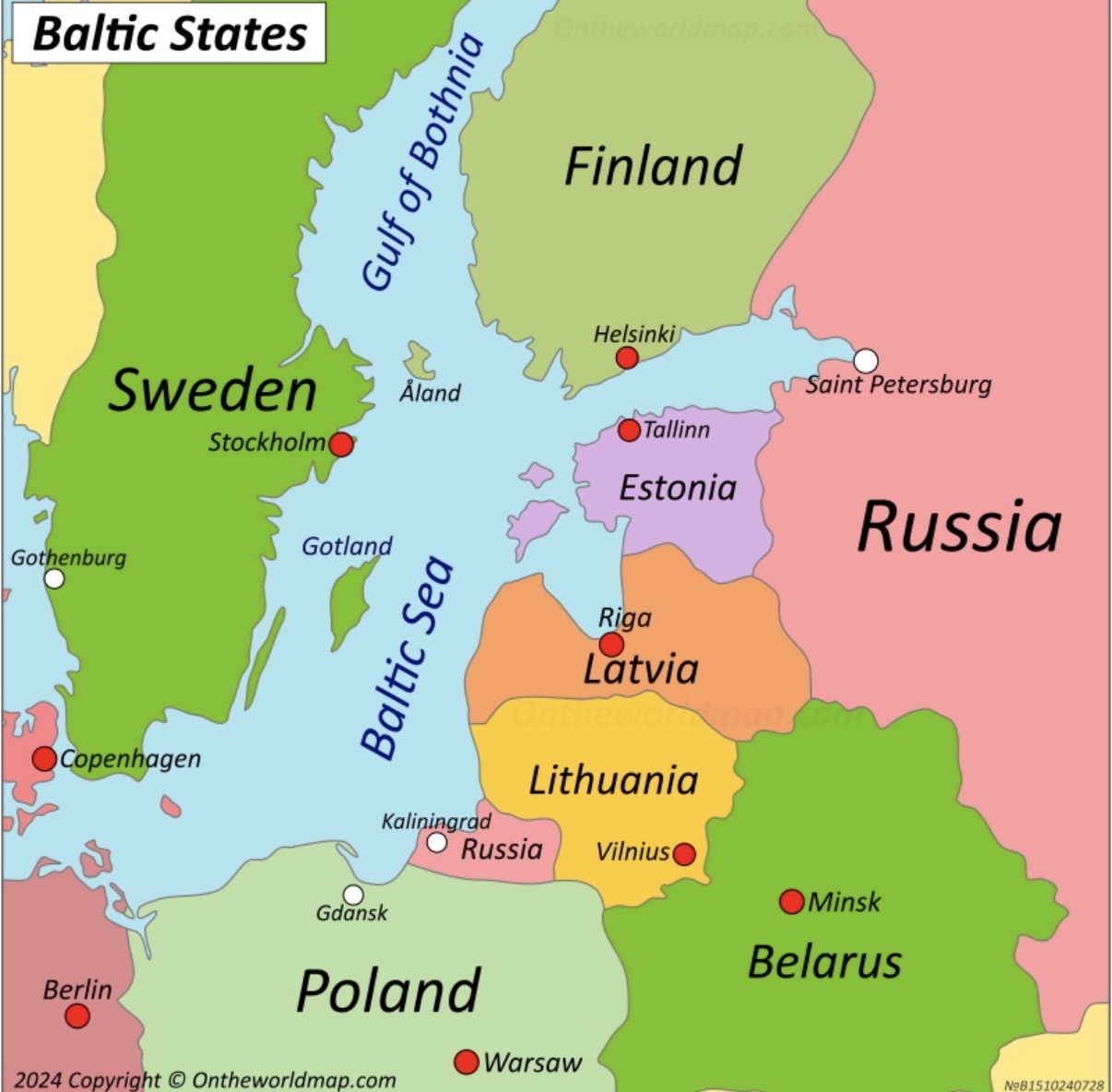
It seems like a lifetime ago that COVID-19 cut our European tour short. In May 2020 we were set to see Estonia, Latvia, Lithuania and Ukraine. But of course we had to go home to the USA and, with everyone else, wait out that crazy time. Six and half years later, here we are finally. It took a while but it was worth the wait – The Baltics: Tallinn Estonia, Riga Latvia, Vilnius Lithuania.
The Baltics : Tallin Estonia, Riga Latvia, Vilnius Lithuania
The Baltics
The three countries of Estonia, Latvia and Lithuania are often referred to as the Baltics because of their position on the Baltic Sea. Estonia, Latvia, and Lithuania share an intertwined history of ancient tribal roots, centuries of foreign rule, a 20th-century fight for freedom, and modern European integration. But each has a strong since of individuality, language, history and patriotism.
Tallin Estonia
Brief History
Ancient Tribes & Crusades: In the early Middle Ages, Estonia and Latvia were inhabited by Finnic and Baltic tribes. During the 12th and 13th-century Livonian Crusades, German crusaders conquered and Christianized Estonia and Latvia, establishing feudal rule and prosperous Hanseatic League trading towns like Tallinn and Riga.
The Rise of Lithuania: Unlike its northern neighbors, Lithuania successfully resisted the crusaders. It consolidated into the Grand Duchy of Lithuania in the 13th century, expanding into a major medieval European power that later united with Poland.
Medieval Castle in Trakai Lithuania
World War II & Soviet Rule: The infamous 1939 Molotov-Ribbentrop Pact led to the illegal Soviet occupation of the Baltic states in 1940. They suffered mass deportations, brutal repression, and a period of Nazi occupation before being re-absorbed into the USSR for 40 years.
Museum of the Occupation of Latvia, Riga.
The Singing Revolution & Baltic Way: In 1989, approximately two million people formed the Baltic Way—a massive 675-kilometer human chain connecting Tallinn, Riga, and Vilnius to protest Soviet rule.
Tallin Estonia
Sovereignty Restored : The collapse of the Soviet Union accelerated their recognition, and all three regained full independence with Lithuania being the first in 1990 followed in 1991 by Estonia and Latvia.
Modern Integration: Today, Estonia, Latvia, and Lithuania are thriving members of the European Union and NATO, known for digital innovation, rich cultural traditions, and strong democratic institutions. You can read more about this regional framework in The Baltic States: Estonia, Latvia and Lithuania (Wikipedia)
Tallinn, Estonia
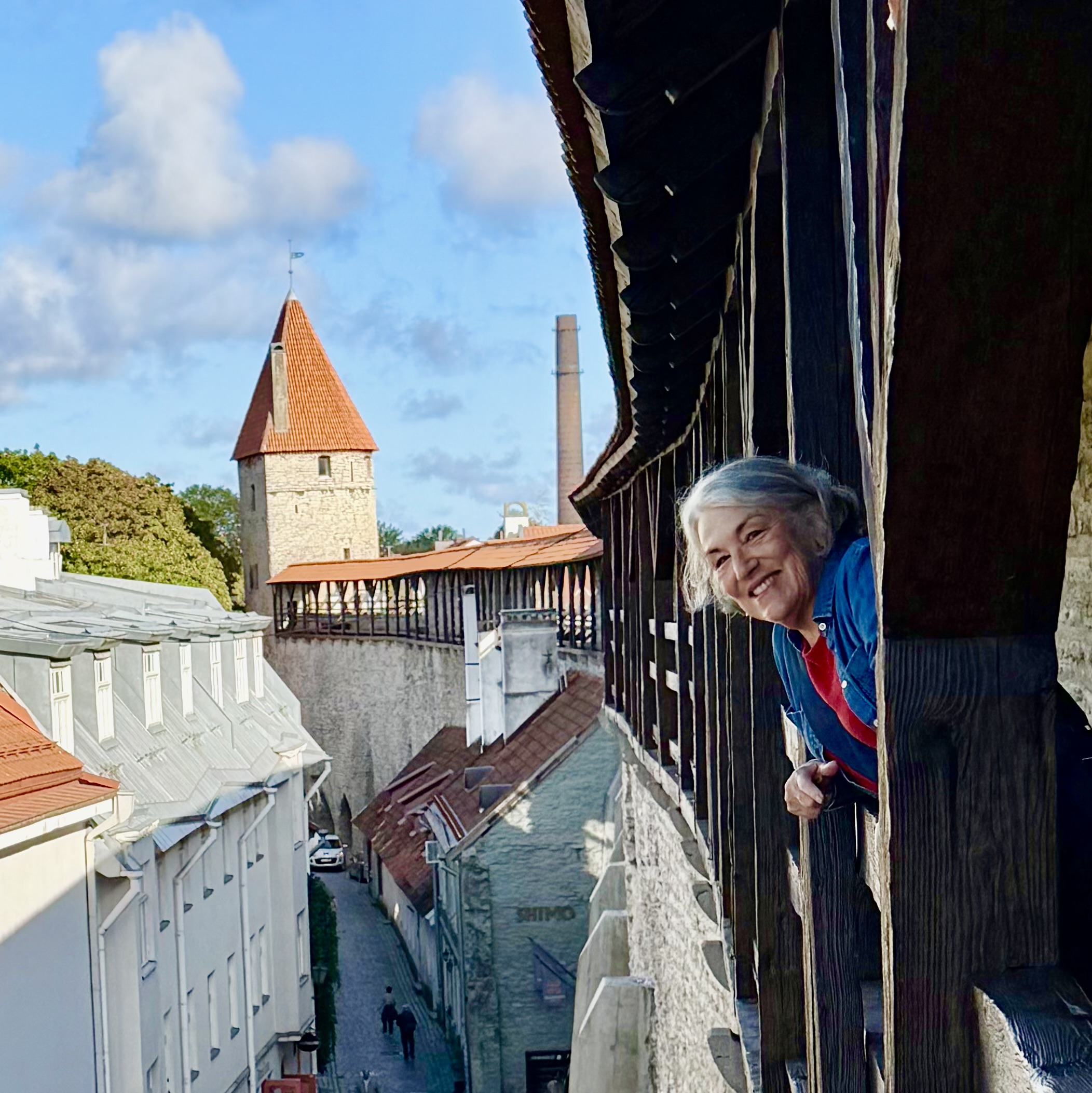
We spent four days in Tallinn, arriving via ferry from Helsinki across the Baltic Sea. Tallinn is a popular cruise port and during the day the old town was busy with cruise passengers. But in the evening it is quieter and offers a lovely selection of restaurants. You could easily do Tallin in two days or more if you want to see the surrounding countryside. During our four days we had comfortable fall weather and enjoyed our quiet wandering and an easy pace. Of the three cities Tallinn’s Old Town is the smallest with the most medieval feel.
Here are our not to miss recommendations all within easy walking distance from Old Town;
Top Rated Sites
Town Hall Square and Town Hall – the main gathering place in the city of Tallin since Medieval times. The Town Hall Tower was built in 1404 (note the tower is only open to visitors in the summer). Tallin’s Old Town and Town Hall Square have the most storybook feel of the three Baltic capitals.
Old Town Hall Estonia
Saint Olav’s Church
St Olav’s Church – built in the 12th century, Saint Olav’s Tower can be seen from nearly everywhere in Old Town
Fat Margaret Tower (Great Coastal Gate) – construction began in 1511 on this town gate providing fortification between the town and the sea
Fat Margaret Tower/Great Coastal Gate
St. Catherine’s Passage
St. Catherine’s Passage – a narrow medieval lane dating to the 13th century and home to former Monastery the passage is a beautiful not to be missed lane
Kiek en de Kok – fascinating underground tunnel and museum dating as early as 1475 with tunnels being used into the 1990’s as Cold War bomb shelters
The Kiek en de Kok tunnel
At Kiek en de Kok Tunnel fascinating presentation
Viru Gate – dating to the 14th century the remnants of this gate marks the entrance to Tallinn’s Old Town. It is also home to the 24 hour flower market
Hellemann Tower and City Wall – adjacent to the Viru gate, this is the best place to access the city wall and towers. Do not miss this.
Viru Gate and flower market
Hellemann Tower and City Wall
Town Hall Pharmacy – still an operating pharmacy in operation since 1422, the Raeapteek is one of the oldest continuously operating pharmacy’s in Europe
Masters Courtyard – another not to miss courtyard, easy to miss but worth the search, home to small shops in an ancient area of old craftspeople.
Town Hall Pharmacy
Master’s Courtyard
St Nicholas Orthodox Church – Church turned museum St Nicholas not only offers a wonderful museum of restoration and conservation, but the best view in Tallin.
One of many amazing restorations at St. Nicholas Church and Museum
The view from the tower at St. Nicholas Church and Museum
Tallinn City Museum – housed in a medieval merchant building from 1400’s the Tallinn City Museum offers history of the region.
Great history at Tallinn City Museum
Located in historic merchants building Tallinn City Museum
Where to Eat and Stay in Tallinn
Our hotel the Hestia Barons was perfectly located for exploring everything we wanted to see in Tallin. In a historic building but comfortable and included a great breakfast. We paid $116 USD per night.
Perfect view from our room at Hestia Barons
We recommend the following for dining in Tallinn;
Old Hansa – yes it’s a bit touristy but I still highly recommend eating at Old Hansa Medieval Restaurant. All by candlelight (no electric lights) with a wide variety of local meats including deer, bear, duck and more. Beautiful interior and great service.
Medieval dining at Old Hansa
Pelman Kohvik – Authentically delicious dumplings, a favorite Estonian food. This is where you want to go.
Perfect dumplings at Pelman Kohvik
Munga Kelder – located in a cellar you might miss it if you aren’t looking. Munga Kelder is known for it’s amazing local mushroom soup and fresh made bread.
The best mushroom soup I ever had at Munga Kelder
Rado – daily fresh menu on a blackboard, you know it’s what the Chef found at the market. We had a great meal here and wine too.
Unique flavors and fresh ingredients at Rado
Maiasmokk Kohvik – the oldest cafe in Tallinn, we stumbled into this fabulous coffee and dessert spot when we decided we needed to partake in the afternoon pastime of a sweet treat. Cake with coffee is a daily ritual, I think I could get used to.
Afternoon cake at Maiasmokk Kohvik – Tallinn’s oldest cafe
Riga, Latvia
Our next stop was Riga Latvia, easily accessible by Flixbus. We have used Flixbus before and find it inexpensive, comfortable and a great way to travel between cities in Europe. We arrived Riga ready to explore for five days.
Riga’s Old Town is not as compact at Tallinn, but it is nicely laid out and easy to maneuver. The restoration of Riga after WWII is remarkable and the town is beautiful once again.
Beautiful Riga Latvia
Top Rated Sites
Riga is a beautiful city that unfortunately was nearly destroyed by WWII Nazi bombing and later by the Soviet Union. After many decades of rebuilding and long awaited independence in 1991, Latvia today is thriving. Riga is proud of how far they have come. Today in Riga the people speak Latvian, English and Russian.
We had five days in Riga, but you could do this town in three days. Or if you have more time there are several day trips you could consider that we did not do.
Town Hall Square and the House of the Blackheads – The Town Hall Square in Riga was completely rebuilt after World War II, when much of the square and its historic surroundings were destroyed. Today, visitors are welcomed by the ornate façade of the House of the Blackheads, the reconstructed Town Hall, and other historic buildings that restore the square’s former grandeur. We loved our self guided tour of the House of the Blackheads.
The House of the Blackheads is named after the Brotherhood of Blackheads, a medieval guild of unmarried foreign merchants, shipowners, and traders who used the building as their headquarters.
Town Square and the House of the Blackheads
Town Hall Square is also home to the spot that marks the first outdoor Christmas Tree (1521) and the Statue of Roland, a striking symbol of Freedom and Justice.
The spot where the first outdoor Christmas Tree was placed in 1521
Roland – a figure of freedom and justice revered in Latvia
Museum of the Occupation of Latvia – this exceptional museum, also located on the Town Square, has the following mission: Remember what happened to Latvia, to its people and land during the Soviet and German National Socialist regimes from 1940 to 1991. Commemorate those who were unjustly convicted and murdered, who died fighting for foreign powers, who suffered and died during repressions and deportations, who fled the occupation forces, and were scattered throughout the world. Remind the world of the offenses carried out by foreign powers against the Latvian state, its land, and its people.
Museum of the Occupation of Latvia is not to be missed
Outside the Museum of the Occupation of Latvia you will find the monument to the Latvian Riflemen, and the memorial to the Victims of the Soviet Occupation. Don’t miss these.
Memorial to the victims of occupation is styled after a traditional Latvian quilt
Saint Peters Cathedral – we visited a dozen churches using GPSMyCity and Saint Peters is absolutely our favorite. The restored church now offers an elevator to the tower where you will enjoy spectacular views of all of Riga.
Saint Peter’s Cathedral, Riga
Swedish Gate and The Three Brothers – Incredible structures untouched by war, the Three Brothers are today the oldest homes standing in Riga. Just down the street you will find the Swedish Gate, the only city gate still standing. Built in 1698 it has somehow survived invaders and wars for centuries.
Swedish Gate
The Three Brothers
Riga Market and Food Tour – we loved our Food Tour which took place primarily in the Riga Market. The market is built inside five German zeppelin hangars from WWI. Riga Central Market is one of the largest markets in Europe and has been an important part of the city’s daily life for nearly a century. The historic market pavilions and outdoor area offer local products, seasonal flavors, and an authentic market atmosphere in the heart of Riga. Don’t miss this.
Historic Zeppelin Hangars turned into Riga Market
Trying Grey Peas for the first time – doesn’t sound appetizing but it was one of our favorite Latvian foods
Canal Cruise – on our final day in Riga we did a canal cruise. 20 Euro each we thought it was well worth the money for the views of this beautiful city from the water as well as the interesting history narrative.
The cruise begins in the Canal
And the cruise makes a loop out in the Daugava River with beautiful views of the city.
Freedom Monument – a beautiful monument, just outside the Old Town, is worth a visit. It commemorates the soldiers who fell during the Latvian War of Independence 1918-1920. The monument surprisingly survived 50 years of Soviet rule, because of it’s high artistic value. It is a symbol for the Latvian people and has served as a gathering and rallying spot for independence and freedom.
Freedom Monument
We recommend using GPS My City app in Riga where you can easily follow the Old Town Riga guide and the Churches of Riga Guide. Both worth doing.
Day Trip
Jurmala – I definitely recommend taking the train from Riga just 30 minutes to Jurmala, resort city on the Gulf of Riga. It’s known for wooden, art nouveau seaside villas, Soviet-era sanatoriums and long, sandy Jūrmala Beach. Near the beach are the Dzintari Concert Hall complex, dating from the 1930s, and Dzintari Forest Park. It was fun to take the train, to walk the long sandy beach, people watch and to have dinner in one of the many restaurants. An easy and fun day trip.
Jurmala Beach busy on a fall Saturday
A delicious and authentic meal in Jurmala
Where to Eat and Stay
We chose Hotel Monte Kristo because of its location near to the bus station, and it was just on the fringe of the Old Town. We easily walked everywhere. The hotel is old, but clean and comfortable albeit a bit quirky. We paid $85 USD per night.
During our visit we dined at several restaurants featuring local Latvian favorites. We also did a food tour of the market, which provided us a full meal for that day. For restaurants we recommend the following;
Gastropub Folkklub – a fun cellar location completely underground with a great menu of local Latvian favs and a great beer selection too.
Cellar dining at Folkklub
Gastropub Abby – a modern pub located near Saint Peter’s Church in the heart of old town. Very large menu with some Latvian specialties and international cuisine as well.
Trying Pink Soup which was delicious. Popular in both Latvia and Lithuania
Grillbars House of Light in Jurmala – on our day trip to Jurmala we chose the House of Light for a wonderful meal that included local seafood and a great dessert.
Napoleon Cake at Grillbars House of Light in Jurmala
Vilnius, Lithuania
Our next stop was the capital of Lithuania – Vilnius. We arrived again via Flixbus after about a four hour comfortable ride. We walked from the bus stop about 15 minutes to the Old Town and our apartment/hotel. Vilnius is the largest of the three capitals but still very easy to get around.
Beautiful Vilnius
Top Rated Sites
Lithuania is historically known for being the largest state in medieval Europe during the 14th and 15th centuries, holding out as Europe’s last pagan nation before converting to Christianity in 1387, and leading the peaceful Baltic Way protest to help dissolve the Soviet Union. Lithuanians are proud of their language and many refuse to speak Russian, which was required of them during the Soviet occupation.
High above beautiful Vilnius you can see for miles
Vilnius is a beautiful city with a fascinating history a bit different than Tallinn or Riga. Specifically of great importance is the devastation of the Jewish population during WWII. The Nazi occupation of Lithuania for three years caused the deaths of 95% of Vilnius Jewish population – more than 250,000 people. These people were not sent to concentration camps, rather were killed right here in Vilnius. Following WWII Vilnius suffered greatly under Soviet occupation and Lithuania was the first to declare independence from the USSR in 1990 after forty years of occupation.
The Occupation Museum – The Museum of Occupations and Freedom Fights in Vilnius is dedicated to showing artifacts and records from the 50-year Soviet occupation of Lithuania. This is an absolute must museum to visit in Vilnius. An eye opening tribute to the perseverance and patriotism of the Lithuanian people. Some people will find the content difficult – but it is so important to understand what happened here.
One cell in the Occupation Museum
The execution chambers in the Occupation Museum
Gediminas Tower – You won’t be in Vilnius long before you hear the name Gediminas. Gediminas (c. 1275 – December 1341) was a powerful Grand Duke of Lithuania who ruled from 1316 until his death in 1341. He is celebrated as one of the most important figures in medieval Lithuanian history. Gediminas’s Tower is the remaining part of the Upper Castle on top of the Gediminas Hill in Vilnius, Lithuania. It has a viewing platform that offers scenic views of Vilnius Old Town and Vilnius Central Business District. Fabulous viewpoint and museum.
Gediminas Tower
View from the tower
Vilnius Cathedral – Vilnius Cathedral is one of the oldest churches in Lithuania. Rebuilt multiple times in its more than 600-year history, it took on its current appearance in the early 19th century. The main structure of the cathedral survived the war intact. As World War II broke out in 1939, church caretakers hid a valuable collection of 16th-century royal burial insignia and crowns inside a secret basement niche to protect them from looting. But In 1949, the Soviets closed the cathedral, looted it, removed and destroyed its religious sculpture.
Cathedral and one remaining tower have been reconstructed
It’s good luck to walk three times around this marker
Gediminas Avenue – spend some time enjoying the pedestrian area of Gediminas Avenue. The Champs de Elysee of Vilnius. From the Cathedral stroll along the shopping and dining area all the way to the Parliament and Constitutional Court and enjoy parks and public art. And maybe some gelato. It really makes you understand how far this beautiful city has come since 1991.
A sweet treat on Gediminas Avenue
Uzupis – Užupis is a bohemian self-declared “independent republic” and artistic district located in Vilnius, Lithuania, separated from the Old Town by the Vilnelė River. Similar to Freetown Christiania in Copenhagen. During the Soviet era, it was a neglected and run-down industrial area. After Lithuania regained independence in 1990, artists and free-spirits moved into the abandoned buildings. On April 1, 1997, local residents humorously declared it the Republic of Užupis, complete with its own flag, anthem, constitution, and president. The tradition continues, all in good fun. Definitely don’t miss Uzipis.
Welcome to Uzipis
Quirky art everywhere you look in Uzipis
Saint Anne’s Church – Vilnius has 48 churches, 28 of those in the UNESCO Old Town. But Saint Anne’s was my favorite. St. Anne’s Church is a Roman Catholic church in Vilnius’ Old Town, on the right bank of the Vilnia river established circa 1495–1500. It is a prominent example of both Flamboyant and Brick Gothic styles. Don’t miss a quick visit.
Beautiful Sanit Anne’s Vilnius
Hales Turges Market – built in 1906 this is Vilnius’ oldest market. Come in the morning about 9am (closed Sunday) to see the locals making the daily purchases and haggling with the vendors. The market includes seafood, meat, cheese, produce as well as dry goods, housewares and even clothing and shoes. Enjoy breakfast or a coffee and one of the cafes.
We took a marvelous day trip with Jim’s Tour to Trakai, a town about thirty minutes from Vilnius and home to the reconstructed island castle. Trakai Island Castle in Lake Galvė is accessible by a pedestrian bridge. The construction of the stone castle was begun in the 14th century by Kęstutis, and around 1409 major works were completed by his son Vytautas the Great, who died in this castle in 1430. Today Trakai is a summer destination for many locals, and we enjoyed a wonderful sunny fall day seeing the castle and walking along the lake. Our guide Jim offered such great and funny insight, not just in Trakai but along the route from Vilnius. I highly recommend this tour. Worth every penny.
We chose to stay in an apartment hotel near one of the gates to Old Town, about a 20 minute walk from the bus station where we arrived. Rooma Apartment Hotel was very spacious, included a small kitchen, washer dryer available and breakfast across the street each morning at a restaurant. We loved this place and recommend it highly. We paid $150 USD per night.
Beautiful room at Rooma in Old Town
We also had a small kitchen and access to laundry
During our visit to Vilnius we had some exceptional food and snacks. We recommend;
Pulpo – surprising Spanish restaurant in the heart of Old Town. One of the best meals we had during our visit to Vilnius. Not only was the food incredible but so was the service, wine and atmosphere.
Deep friend olives were incredible
The namesake dish at Pulpo
Gabi – Open since the 1970’s Gabi is popular with locals and tourists alike. We enjoyed a meal in the courtyard on a quiet late afternoon.
Feta stuffed Eggplant rolls
Potato Pancakes with salmon and sour cream at GABI
Senoji Trabele – I read that this restaurant was one of the most authentic in Vilnius so we had to give it a try. We walked about 30 minutes outside of the Old Town to find Senoji Trabele. It was worth it. This restaurant is huge, takes tour groups in the summer, but while we were there on a Sunday afternoon we nearly had the place to ourselves.
Senoji Trobele
Authentic and delicious Cabbage Rolls
Etno Dvaras – Multiple locations in Old Town we enjoyed an authentic Lithuanian soup lunch
Pork and cabbage soup
Local lagers did not disappoint
Traku Dvarells – on our day trip to Trakai our guide took us to Traku Darell’s to enjoy two Lithuanian specialties; fried bread with garlic cheese and Kibinai, a local specialty. Definitely stop at Traku Darell’s when you visit Trakai.
Kibinai is a Lithuanian favorite stuffed pastry
Fried bread is popular throughout the Baltics
The Baltics: Tallinn Estonia, Riga Latvia, Vilnius Lithuania.
We loved our long awaited 13-day tour of the Baltic capital cities. You could do it in fewer days, but you could also add many more days to explore regions outside of these cities. Each has its own unique personality, and I can’t say I liked any more than another. As we progressed through our itinerary I fell in love with each place for the amazing people, their resilience, and how they embrace a strong cultural history and identity even more today than perhaps ever before.
Tallin Estonia
I highly recommend visiting The Baltics: Tallinn Estonia, Riga Latvia, Vilnius Lithuania. I am so glad we finally did.
Thank you for reading my post The Baltics: Tallinn Estonia, Riga Latvia, Vilnius Lithuania. See last week’s post Quietly Finding Finland here. Our next stop is The Netherlands. I hope you will follow along with us on Instagram.
We love it when you comment, share, pin and engage with our posts old and new. Thank you.
Someone asked me recently how many UNESCO sites we have visited? Oh my goodness. A LOT. Yes I should try to add that up, but there are thousands and thousands and we have certainly been blessed to see hundreds. And Merida Yucatan is new addition to the list. We had five days in this beautiful city, and here are my recommendations, Merida A Cultural Gem in Yucatan Mexico.
This article is also featured on GPSmyCity. To download this article for offline reading or create a self-guided walking tour to visit the attractions highlighted in this article, go to Walking Tours and Articles in Merida.
Enjoying Plaza Mayor in Merida and the unique confident or kissing chairs through out the city
The Mayans
I have been intrigued by the Mayan Culture since I was in grade school. As a traveler we have explored many of this civilization’s vast and interesting sites. A little history lesson for you; The Maya civilization is significantly older than the Aztec, with the Maya developing complex societies from around 2000 BC and reaching their Classic Period peak (250–900 AD) long before the Aztec Empire’s rise in the 14th century, though both cultures thrived in Mesoamerica and influenced each other.
By the time the Spanish arrived in what we now call Mexico, the Maya people had left their ruling communities such as Chichen Itza (more on this later) but their descendants were still in the region. The Aztecs however had risen to power, and it is their civilization that the Spanish decimated on arrival. And yet today, many people of the area can trace their heritage to both Maya and Aztec ancestors.
Merida History
Merida’s history blends Mayan heritage with Spanish conquest. Founded in 1542 by Francisco de Montejo on the ancient Mayan city of T’ho, the Spanish used stones from the ruins of T’ho for colonial buildings, creating a unique fusion seen in its architecture. The city became a significant colonial hub. In the 1800’s the process of turning sisal (henequen ) into rope and twine created a very wealthy class of merchants. The wealth is evident today in grand mansions on Paseo de Montejo. Merida in the 21st Century is a vibrant cultural capital, preserving Mayan traditions, distinct cuisine, and colonial charm, making Merida A Cultural Gem in Yucatan Mexico.
Paseo de Montejo
Things to do in the City
Take a guided walking tour or do a self guided tour like we did using GPS My City. Highlights for us included:
Plaza Mayor – the main square of old town Merida where people gather day and night and festivals and events take place regularly.
Cathedral de Merida – right on the Plaza Mayor you will find a beautiful cathedral that graces the city, dating back to 1540. It is said to be the second oldest Cathedral in Latin America.
Casa de los Montejo – dating back to 1540, this historic gem has served as a mansion for generations and today houses a bank and museum. Pay particular attention to the ornate facade.
Cathedral de Merida
Casa de los Montejo
Mercado Lucas de Gálvez is the largest and most central market in Mérida, spanning 45,000 square meters and hosting over 2,000 vendors. Just steps from Plaza Grande, it’s a key destination for local produce, street food, crafts, and daily essentials in the historic city center. I have been to A LOT of markets around the world, and this one blew my mind. Don’t miss it. And while you are in the area, walk through the streets surrounding the Mercado, where the locals do their shopping. It’s like a completely different city than the tourism zone.
Mercado Lucas de Gálvez
Colorful and lively Mercado Lucas de Gálvez
Government Palace – don’t expect a bureaucratic building, this lime green gem is home to a fantastic art collection that you must not miss.
Government Palace
Art collection tells the story of the people of the region in large beautiful mural style paintings by Fernando Castro Pacheco
Church of the Third Order of Jesus – look closely at the exterior of this cathedral and you can see how it was built (like much of this city) with stones from the Mayan pyramids of Th’o.
Moorish House – a little off the beaten path but worth making the short detour, this beautiful building has been recently restored and expanded. Over the years it has served as the US Consulate, a maternity hospital and a private home.
Church of the Third Order of Jesus
Moorish House
Paseo de Montejo – Stretching from Santa Ana to the center of Merida, this avenue is where residents have strolled for generations. Home to many of the palaces built during the wealthy sisal period, it is also home to restaurants and shops. Be sure to check out Camara Houses, Canton Palace (home of the Yucatan Regional Museum) and Quinta Mones Molina House with a really interesting museum and self guided tour.
Camara Houses
Canton Palace home to the Yucatan Regional Museum
Quinta Mones Molina House
Quinta Mones Molina House Museum
Day Trips Outside the City
East
Chichen Itza – less than two hour drive from Merida is the UNESCO World Heritage archeology site of Chichen Itza. This complex of Mayan ruins includes a massive step pyramid, known as El Castillo or Temple of Kukulcan. Chichen Itza thrived from around 600 A.D. to the 1200s. Graphic stone carvings survive at structures like the ball court, Temple of the Warriors and the Wall of the Skulls. There are tour buses and private tours available from Merida. I recommend you arrive before they open at 8am to beat the crowds. The large tour buses arrive around 9am.
El Castillo Chichen Itzá
Chichen Itza
Ball Court Chichen Itza
Izamal – many Chichen Itza tours also stop for a brief visit to the “Yellow City” of Izamal. I would not recommend a special trip to Izamal, but a brief stop on a Chichen Itza tour is nice. We wandered the colonial streets and convent area, built on top of a Maya settlement from 2000 years ago.
Izamal Yucatan
Southeast
Cenotes – the Yucatan Peninsula is home to 10,500 cenotes (at least). These are a collapse of limestone bedrock that exposes groundwater. The term is a Mayan word originating on the Yucatán Peninsula, where the ancient Maya commonly used cenotes for water supplies, and occasionally for sacrificial offerings. The small town of Homun near Merida is home to multiple cenotes open to the public. You can visit these on your own, but we chose to go with a full day tour, which took us to four beautiful cenotes. We swam in the beautiful crystal clear blue water under ground. It was a great day.
Cenote in Homun
Fully underground Cenote lit with artificial lighting
Very large Cenote at Santa Rosa
San Antonio Cenote
Southwest
Campeche – this beautiful ancient walled city is about two hours from Merida. It is one of the reasons we chose Merida as a central hub to stay and access many things in the surrounding region. I have had my eye on Campeche for some time. This Spanish Colonial city, once a walled fortress, dates back to the 16th century. We really enjoyed the colorful town, walking the remaining wall, the cathedral, the historic fort and the Gulf of Mexico. Being on the sea, the seafood in Campeche is also great, and we had a marvelous lunch at Marganzo Restaurante. Campeche warrants a couple of days if you have the time to spare.
I saved the best for last. We visited Becal to see the art of Jipajapa hat making. This was my favorite thing we did during our Yucatan visit. Becal is an hour from Merida and we made the stop on our way to Campeche. We visited a tiny local museum to learn about the iconic Jipajapa artistic hat making (also known as Panama Hat). Jipijapa refers primarily to a type of high-quality, handwoven hat made from the leaves of the Carludovica palmata plant. The best part though was visiting a local third generation family artisan workshop.
Chari making a work of art in the cave. The wooden block hat form she is using was handed down from her grandma’s grandma
Here we were given a private demonstration of how the fibers are grown, dried, processed and dyed. Then lovely Chari, known around the world for her Jipa talent, gave us a one on one demonstration. We sat in the cool underground cave where the hats are made to keep the fiber moist while handling it. It’s difficult to describe how incredible her nimble fingers are as she created her works of art. Of course I went home with a hat of my own. Do not miss visiting Chari when you are in Becal. Ask your guide to take you to Lool Jipa Chari.
Fibers used for the hats
The colors are made from natural dyes
Press molds are used for certain hats
My new work of art
Eating and Sleeping
We spent five night in Merida. The Casa Continental Hotel in the Santa Ana neighborhood of the historic center was a great find. Just outside the busiest area, but close enough to walk to everything. Really kind staff and the rooms were just beautiful. We paid just over $70 USD per night.
Casa Continental
Rooftop pool at Casa Continental
Lobby at Casa Continental
Breakfast
We opted most mornings to have fruit and yogurt in our room. We did have an amazing breakfast on our first morning, right across the street from our hotel at Marmalade. Highly recommend.
Chilaquiles at Marmalade
Mexican Hot Chocolate at Marmalade
Lunch
It’s always good to eat where the locals eat and we had amazing, cheap tacos at Taqueria de La Union. We also enjoyed our first ever Gorditas at Gordita Dona Gorda. Watch the ladies make your Gordita as you wait. Fast, cheap, delicious.
Interesting new-to-us tacos like Turkey in black mole sauce at Taqueria de La Union
Made to order Gorditas at Gordita Dona Gorda
Dinner
We headed to Chaya Maya for an authentic Mayan meal and we were not disappointed. Favorite new-to-me foods were the dip made from pumpkin seeds called sikil pak. I also loved the melt in your mouth pork dish marinated in sour orange and achiote called Cochinita Pibil. You must try these dishes when in the Yucatan. I found this recipe online and will make Cochinita Pibil at home.
Sikil pak on the left
Cochinita Pibil
We loved our simple and healthy dinner at La Santanita near our hotel. We ate here on our first night, and I was introduced to Lime Soup, a local specialty. The chicken and lime combination was superb. I highly recommend. Here is a recipe for Yucatan Lime Soup I found online. This is an easy one to try at home.
Superb and comforting Lime Soup
Our best meal in Merida was at Teya Santa Lucia. We sat in the outdoor courtyard on a beautiful evening. Instead of entrees we shared several appetizers. We loved the pumpkin dip sikil pak, sausages and panuchos (a fried tortilla stuffed with beans).
sikil pak
Mezcal and Lime
The courtyard at Hacienda Teya
How Long Should You Stay in Merida
It became apparent to us very quickly that there are many “snowbirds” or possibly full time American/Canadian expats in Merida. Not surprising as the weather is mild and comfortable from December to March, but summer can be very hot and muggy. The rainy months are June and July.
We spent five nights in Merida and we were on the go everyday. I think I would enjoy a full month in this pretty city, to enjoy more of the cuisine and culture. But if you only have three – five days you can see a lot, just as we did. There is more too, so stay as long as you can in Merida A Cultural Gem In Yucatan Mexico
Colorful door in Campeche
How to Get to Merida
We arrived by hired car from Cancun, but there are direct flights from the United States and Mexico City. When we left Merida we flew on Viva Air (a very inexpensive no-frill airline) to Querataro then drove on to San Miguel de Allende. Merida is becoming a bigger tourism destination and a new train has also been recently opened that connects Merida to Campeche and Cancun, but schedules are still limited. Learn more about the Mayan Train here. Private buses are also a good option for getting around within Mexico.
Merida A Cultural Gem In Yucatan Mexico
Thank you for reading my post Merida A Cultural Gem In Yucatan Mexico. We loved our time in Merida, our second stop on a month long tour of Mexico. I definitely can see us returning to this city for the culture, the food and the very friendly people, all at a price that is right. Gracias Merida. We hope to see you again soon.
Most restaurants have Tortilla Ladies making fresh tortilla all day long
Keep following for more about our Mexico adventures as we continue our tour!
We are always so grateful for your pins, shares, comments and time on our website. Your shares and time help us battle the annoying algorithms. Muchos Gracias Amigos!
This is part two of our BC Canada Road Trip. I recently shared Road Trip Vancouver Island British Columbia. Boy did we enjoy seeing some of beautiful Vancouver Island. After our five days on the island we headed across on the ferry from Comox to continue our trip along the beautiful Sunshine Coast. Here is my story Road Trip Sunshine Coast British Columbia Canada.
On board the ferry to Powell River from Comox
Part Two
Road Trip Sunshine Coast British Columbia
The ferry from Comox requires a reservation, which we made well in advance at a cost of $73 CAD / $53 USD. It was a gorgeous day and the ferry ride was very scenic (we saw whales breaching in the distance). On arrival in Powell River we made a brief stop to pick up groceries before heading north on Hwy 101 about 30 minutes to the tiny town of Lund.
Welcome to Lund
Lund British Columbia
In case you haven’t made the connection, my last name is Lund. My husband’s family is Scandinavian and there is town in Sweden called Lund. The tiny village of Lund British Columbia is named after the city in Sweden. Lund, by the way, means grove.
Where is Lund?
For the past forty years Arne and I have talked about visiting Lund British Columbia. Yes I said forty. Good grief…once again why don’t we visit beautiful British Columbia more often? So when we were planning our summer 2025 I insisted we finally visit Lund.
History of Lund BC
Lund, British Columbia, is a historic village with a rich past, initially established by Swedish immigrants, the Thulin brothers, in 1889. Before European settlement, the area served as a winter campground for the Coast Salish people. The Thulins developed Lund into a thriving port, building a store, post office, hotel, and wharf.
Small harbor at Lund
Hike the Lund Loop
Today, Lund is a picturesque seaside village known for its harbor and access to Desolation Sound. It’s often referred to as the “End of the Road” as it’s the northern terminus of Highway 101. This highway is part of one of the longest highway networks in the world, running along the coast from Canada to Chile.
Desolation Sound
In the summer of 1792, two expeditions led by Captains George Vancouver, and Dionisio Alcalá Galiano and Cayetano Valdés y Flores arrived and cooperated in mapping the sound. Vancouver named it Desolation Sound, cryptically claiming that “there was not a single prospect that was pleasing to the eye” (credit Desolation Sound Resort).
Many watercraft at Lund
Today Lund is the hop off point for wonderful water adventures in Desolation Sound. People come from all over the world to kayak, fish, sail, and hike the region. Lund has a population of 1250, and sits on the traditional and unceded territory of the Tla’amin, Klahoose, and Homalco First Nations. The native name of Lund is Klah ah men. This name, given by the Coast Salish people thousands of years ago, reflects the historical significance of the Lund Harbor as a safe and sheltered place where people could interact, hunt, gather food, and launch canoes along the Salish Sea. It was a vibrant cultural hub important for practical everyday life as well as for storytelling and sharing traditions.
Two Short Days in Lund
We did not have much time in Lund, but we did do a self guided tour of the beautiful harbor and had a late lunch of poutine and beer at the waterfront restaurant The Boardwalk, before checking in to our Airbnb.
The Boardwalk is a popular restaurant on the water in Lund. Definitely visit.
When in Canada – Poutine
We loved our cute and comfortable and sparkling clean Airbnb and decided it was a good evening to relax and have dinner at home.
Great little Airbnb with kitchen just outside of the town of Lund
Next morning we were up early for a full day of hiking on the Sunshine Coast Trial.
We met a lot of through hikers enjoying a multi-day trek. But for us our seven mile round trip (we headed north from Malaspina Road) gave us some beautiful views of the sound as well as forests and birds. I highly recommend finding some time to hike a portion of the Sunshine Coast Trail.
View of Okeover Inlet
The Laughing Oyster
After a shower and relax back at our cute little Airbnb we headed out to Lund’s highest rated restaurant The Laughing Oyster. Located outside of the tiny Lund marina area, and technically in Powell River, The Laughing Oyster not only has great food but it has a spectacular view of Desolation Sound. I’m glad we were able to get a reservation, because the food plus the view were a perfect ending to our brief, beautiful and long awaited visit to Lund British Columbia.
Cheers to Lund
Delicious Sablefish
Don’t miss The Laughing Oyster when in Lund
Southbound
For the first time in more than a week we turned our trusty Subaru towards the south for the drive to Halfmoon Bay. Another ferry ride was included from Saltery Bay (about an hours drive) to Earls Bay. There are no reservations on this run. After we disembarked and at the recommendation of my blogger friend from Retired and Traveling we made a stop to hike to Skookumchuck (skuh·kuhm·chuhk) Narrows.
Another ferry ride
Skookumchuck Narrows
Wow. Don’t miss this place. We would have if our friend Linda hadn’t suggested it. It’s an easy 2 mile hike from the parking area down to the narrows. At the parking you will also find restrooms, food and other services. Here is what the BC Parks Webpage has to say about this fabulous natural phenomenon;
Skookumchuck Narrows
” Skookumchuck Narrows Park provides trails and viewing areas for visitors who wish to experience the awesome power of incredibly turbulent tidal rapids. On a three metre tide, 200 billion gallons of water flow through the narrows connecting Sechelt and Jervis Inlet.
So glad we came here
The rushing water was astonishing
The difference in water levels between one side of the rapids and the other sometimes exceeds two metres in height. Current speeds can exceed 30 km per hour. The rapids are famous for their spectacular whirlpools and whitewater.” Learn more here.
Enjoy a cinnamon roll at the Skookumchuck Bakery after your hike.
A little midday treat
Halfmoon Bay
We arrived at our cute accommodations, the Loghouse at Halfmoon Bay, in the afternoon. This is a wonderful spot in a quiet little cove. Comfortable ground floor room with a small outdoor space, the hosts provide you make-your-own breakfast goodies including eggs, cereal, yogurt, coffee and more. I would definitely stay here again.
Loghouse at Halfmoon Bay
By this time on our road trip we were feeling a bit tired, but we took a walk to see the small beach, ogle at the beautiful homes and enjoy the pier, before jumping in the shower and getting ready for dinner.
The small beach near our lodge
Gorgeous pier and homes
The travel blogger friend I mentioned above lives in the town of Sechelt, about 15 minutes drive south on the Sunshine Coast. We enjoyed a glass of wine at their beautiful condo, before heading into Sechelt for dinner at a waterside restaurant.
Sechelt
Sechelt (see·shelt) is known for its relaxed seaside vibe, beautiful natural scenery, and outdoor recreation opportunities. It has a quiet downtown area, beautiful views of the passage and Desolation Sound. Sechelt is a great jumping off point for all the recreation on the Sunshine Coast.
Next time we will stay longer in this cute little town.
Final Days
After being on the move for nine days, we decided to enjoy a quiet final day in Halfmoon Bay. We loved our little outdoor space and made use of it through the day while reading and doing some work on the laptop.
Halfmoon Bay
We had a casual early dinner at the historic Halfmoon Bay General Store . Operating since 1937, they recently reopened after a complete rebuild. It will continue to be a gathering place for the community of Halfmoon Bay with its indoor and outdoor seating area. We enjoyed a fresh-made sandwich and some beer sitting in the sun on the deck. The store also has a small selection of groceries and gifts. After our dinner we headed down to the pier to watch the sun set into the Pacific Ocean.
Refreshing local cider
Dinner at Halfmoon General
Sunset on our final night
Heading Home
Day ten and we woke up really early to drive the 45 minutes to the Langdale ferry terminal. The ferry crosses Howe Sound to take us to Horseshoe Bay, about a half hour’s drive on into Vancouver. The ferry is free in this direction (surprisingly) but still requires a reservation in the summer. We had a reservation for the 7am boat but actually got on the 6:30am. It was a stunning boat ride as the sun was coming up with the route weaving in and out of the islands.
Gorgeous morning
Originally we had planned to finish this trip with a couple of days in Vancouver, but due to commitments back home we had to cancel that part of our trip. Vancouver is a favorite destination though, and I hope to get back to that beautiful city again soon.
Sunrise from the ferry
Road Trip Sunshine Coast British Columbia
Our ten day British Columbia road trip with part one on Vancouver Island and part two on the Sunshine Coast was better than we could have hoped. We loved all of our accommodations, the food, the sites, the history, the hiking, the sea…everything. The people are kind, the exchange rate is incredible, the ferry system is fairly priced and reliable. Wow. What more could you want?
Thank you Canada!
Thank you for reading Part Two of our BC Road Trip; Road Trip Sunshine Coast British Columbia. See last week’s post Road Trip Vancouver Island British Columbia here. Stay tuned for more fun travel posts coming to you soon!
We are always grateful when you help our blog posts find other readers by sharing, commenting and pinning this post. Thank you.
This website uses cookies to improve your experience. We'll assume you're ok with this, but you can opt-out if you wish.AcceptRejectRead More
Privacy & Cookies Policy
Privacy Overview
This website uses cookies to improve your experience while you navigate through the website. Out of these, the cookies that are categorized as necessary are stored on your browser as they are essential for the working of basic functionalities of the website. We also use third-party cookies that help us analyze and understand how you use this website. These cookies will be stored in your browser only with your consent. You also have the option to opt-out of these cookies. But opting out of some of these cookies may affect your browsing experience.
Necessary cookies are absolutely essential for the website to function properly. This category only includes cookies that ensures basic functionalities and security features of the website. These cookies do not store any personal information.
Any cookies that may not be particularly necessary for the website to function and is used specifically to collect user personal data via analytics, ads, other embedded contents are termed as non-necessary cookies. It is mandatory to procure user consent prior to running these cookies on your website.


 down.
 plummeted and we put all our clothes on including wool socks and hats and snuggled under the covers for the night.


 Kasbahs in Morocco, the Amerhidil – built-in the 17th century and in remarkable condition. Given that most of this construction is made from mud and straw bricks, finding well-preserved ones of this age is unusual. We toured the building, ate a delicious lunch of grilled turkey kebab and then headed on our way to our hotel.


 Kasbahs of old are like something out of a movie set (and some are) but they are real. And beautiful. And cherished by the wonderful Moroccan people.