Follow:
Topics:
Browsing Category:

North America Travel

    Food & Drink  --  North America Travel

    Let’s Talk Tamales

    This is our final post about our wonderful five weeks in Mexico this winter. I am so intrigued by this country…not the beaches as much as the history, culture and the food. I can’t seem to get enough. On this most recent visit, I took a tamal cooking class in Mazatlan. Not only did I learn a lot about this delicious Mesoamerican treat, I also learned some great history. So today. Let’s Talk Tamales

    Let’s Talk Tamales

    What are Tamales?

    The word tamales is plural for tamal, a dough wrapped in a corn husk, often including meat or vegetables, and steamed to make a solid but soft delicious treat.

    Tamales originated in Mesoamerica as early as 8000–5000 BC, making them one of the oldest known corn-based dishes. Developed by early civilizations like the Olmecs and Maya as portable food for warriors and hunters, they were adopted by the Aztecs and spread throughout the Americas.

    Before food processors the corn was hand milled on a stone

    Candelmas

    We coincidentally found ourselves in Mazatlan on February 2nd, a national Mexican holiday associated with the Catholic Church called Candelmas or Candelaria. I was not familiar with this holiday nor of the association it has to tamales. Here is what I learned;

    Tamales are associated with Día de la Candelaria because of a rich, blend of indigenous Aztec agricultural traditions and Catholic celebrations brought by the Spanish. February 2nd marks the end of the holiday season, where tamales—representing abundance and community—are served to honor the blessing of corn and the birth of Jesus.

    Candelaria (Pinterest)

    Historical and Cultural Significance

    Historically, February 2nd aligned with the Aztec start of the new year and the planting season. Indigenous peoples offered maize-based foods, like tamales, to gods such as Tlaloc (god of rain) to ensure a prosperous harvest. When the Spanish arrived, they blended these rituals with the Catholic feast of Candlemas, which commemorates the presentation of Jesus at the temple and the blessing of candles.

    The tradition is also tied to the Three Kings’ Day (Jan 6th). Whoever finds the figurine of baby Jesus in the Rosca de Reyes bread is designated the host for the Candelaria party and is responsible for providing the tamales.

    Learning from the Locals

    Although I had made tamales at home once before (not too bad for a first effort) I was excited to have a class with Tomatl, a Mazatlan food company offering food tours and cooking classes. This special tamales class is only offered once a year in conjunction with the Candlearia celebration.

    In the kitchen with Paola
    Paola was a fun and informative teacher
    Step by Step

    We gathered at the home of Paola, the owner of Tomatl. Spending the day with Paola and 6 other cooking class guests we tolied and laughed and created and ate. It was a great day.

    Savory Tamales

    We made two kinds of tamales. The first using dry corn we rehydrated and mixed with Masa Flour. This dough we spread on dry corn husks that had been soaked in boiling water to make them plyable. We added some vegetables and delicious tender slow roasted pork. Then we learned how to carefully wrap the corn husks and tying them with strips of corn husk. Into the giant steamer they go for an hour and 20 minutes. Here is Paola’s recipe;

    Frijoles Puercos (Pork Style Beans)

    Ingredients

    • 1 kg (2.2 lb) dried beans (preferably azufrado beans)
    • ¾–1 kg (1.6–2.2 lb) lard
    • ½ kg (1.1 lb) Mexican chorizo
    • 1 can sardines in tomato sauce (remove the backbone inside)
    • 210 gr of tomatoe pure
    • ½ kg (1.1 lb) Cotija cheese (reserve some for garnish)
    • Salsa Huichol, to taste or any can of chile sauce could be Valentina
    • Green olives
    • Fresh jalapeño chile
    • Dried chile de árbol (to fry before adding the chorizo)

    Procedure

    1. Prepare the beans
      Clean the beans, cook them until tender, and mash them.
    2. Start with the lard
      In a pot, melt the lard over low heat.
      Fry the dried chile de árbol briefly — do not let it burn, as it will turn bitter.
      Remove and reserve for garnish.
    3. Cook the chorizo
      Fry the chorizo in the lard, but do not let it brown too much.
    4. Add the beans
      Once the chorizo is cooked, add the mashed beans.
      Let them cook for about 5 minutes.
    5. Incorporate remaining ingredients gradually
      Add the sardines.
      Then add the tomato purée and Salsa Huichol or Valentina 
      Keep the heat low at all times and stir constantly.
      Wait about 5 minutes between adding each ingredient.
    6. Finish the mixture
      Add the Cotija cheese, olives, and sliced jalapeño.
      Continue cooking over low heat, stirring constantly to prevent sticking.

    🔥 Cooking Notes

    • Total cooking time is approximately 1 hour, always over low heat.
    • Stir continuously.
    • The key is that the beans must “render” — meaning you’ll see the fat rise to the top and become visible. That’s how you know they’re ready.

    🌶 To Serve

    After about an hour, once ready:

    • Top with diced Cotija cheese
    • Garnish with the fried chile de árbol

    Serve warm with fresh tortillas or as a party dip.

    Dried Corn
    Preparing the meat
    Savory tamal preparation
    Teamwork

    Sweet Tamales

    The second tamales we made were made with elote – the name in Spanish for sweet, fresh corn. We removed the corn from the cob, preserving the husks. In a blender the dough was created with the fresh corn, lard, sugar and Masa Harina flour. When the dough was ready, we used the fresh corn husks to wrap the dough, tying once again with strips of fresh corn husk.

    Here is Paola’s recipe;

    Sweet Corn Tamales (Tamales de Elote) 

    (12 tamales)

    Ingredients

    • 8 tender fresh corn ears, kernels removed
    • 120 g (½ cup) unsalted butter, softened
    • 2 teaspoons melted lard
    • 1 tablespoon baking powder
    • 15 tablespoons sugar
    • 3 tablespoons powdered milk
    • Corn husks (from the same ears or dried husks, soaked in warm water until pliable)

    Instructions

    Prepare the corn

    In a food processor, grind the fresh corn kernels until very finely blended, forming a soft paste with only a few small lumps remaining. The texture should be moist and slightly thick. 

    Preparing Fresh Corn Husks for Tamales

    When making tamales de elote, you can use the fresh husks from the same corn instead of dried ones.

    Remove and Cut the Husks

    1. Peel Carefully: Gently pull back the husks from each ear of corn without tearing them. Try to keep the largest outer husks intact — these are the best for wrapping.
    2. Separate by Size
    3. Large, wide husks → Use for wrapping the tamales.
    4. Small or torn pieces → Save for lining and covering the steamer.
    5. Trim if Necessary
      1. Cut off the thick stem end at the base.
      1. If a husk is very long, trim the narrow tip so it’s easier to fold.
      1. The ideal size is large enough to hold 2–3 tablespoons of batter comfortably.
    6.  Soak the Husks
    7. Rinse them under cool water to remove any silk or debris.
    8. Place them in a large bowl or basin.
    9. Cover with very warm (not boiling) water.
    10. Let them soak for about 20–30 minutes, until flexible and pliable.

     The goal is to make them soft enough to fold without cracking.

    5.    Dry Them Before Using

    • Remove the husks from the water.
    • Shake off excess water.
    • Lay them flat on a clean kitchen towel.
    • Pat them dry gently — they should be damp and flexible, but not dripping wet.

    Tip for Steaming

    • Use the smaller husks to line the bottom of the steamer.
    • Place a few extra husks on top of the tamales before covering the pot.
      This helps trap steam and prevents water droplets from falling onto the tamales.

    Make the batter

    Transfer the ground corn to a mixing bowl.
    Add the softened butter, melted lard, baking powder, sugar, and powdered milk.

    Mix thoroughly until all ingredients are fully incorporated and the batter is smooth.

    Wrapping the Tamales

    1. Drain the soaked corn husks and pat them dry.
    2. Place about 2–3 tablespoons of batter in the center of each husk.
    3. Fold the sides inward, then fold up the bottom to enclose the filling.
    4. Arrange the tamales upright in a steamer pot, open side facing up.

    Steaming

    1. Add water to the bottom of a steamer pot (make sure the water does not touch the tamales).
    2. Cover with extra husks or a clean kitchen towel.
    3. Steam over medium-low heat for about 60–75 minutes.

    Check occasionally to ensure the water does not run out.

    The tamales are done when:

    • The dough feels firm to the touch
    • The husk easily pulls away from the tamal
    • They hold their shape when opened

    Let them rest for 5–10 minutes before serving.

    Fresh corn gets pulverized in the food processor
    Spreading the sweet corn dough
    The cobs are layered in the bottom of the pan before the tamales go in.
    You definitely need a big pot

    Let’s talk Tamales

    This is definitely one of my new favorite foods and I will be practicing at home. Though time consuming, it is a labor of love and you really should give it a try. If you don’t want to tackle these more difficult recipes on your first try, you might consider trying a simpler recipe like this one for tamales I found on Pinterest. But I encourage you to try the authentic version… you won’t regret it. Since Tamales are a symbol of unity, because the corn from the harvest is processed and shared with family and friends, I think they would make a great addition to your Easter table. I love the history of indigenous and Catholic traditions and the importance they have to ancestors and honoring the earth.

    Ta Da!

    Thank you for reading my post Let’s Talk Tamales and for following all my posts from our visit to Mexico. Please see last week’s post Marvelous Mazatlan Mexico here.

    We love it when you pin, share and comment on our blog posts. Gracias.

    Let’s Talk Tamales
    North America Travel

    Marvelous Mazatlan Mexico

    Beaches and So Much More

    In 1982 we went to Mazatlan on our honeymoon. Yep…43 years ago. I’m not sure why we have never been back, because we had a great honeymoon. But, we hadn’t. Until now. Joining our lifelong friends for a wonderful return to Marvelous Mazatlan Mexico – beaches and so much more!

    There we are, dancing the night away on our Mazatlan Honeymoon 1982

    Beaches and So Much More

    Go for the beaches of course, but there is so much more. We found a place much changed in 43 years… much more developed with large hotels and resorts. But also with a preserved old town, quaint and colorful revitalized historic neighborhoods and an abundance of incredible restaurants. Maybe not as authentic as the Mazatlan of 1982, but full of charm, culture and cuisine. Here is what we enjoyed on our visit to Marvelous Mazatlan Mexico.

    Morning coffee on the beach

    Arrival

    Mazatlan’s small international airport has direct flights from many domestic airports and a few international airports as well. We arrived from Mexico City. Although the Benito Juarez International Airport in Mexico City is one of my least favorites, arriving in Mazatlan was easy. We quickly had our bags and found the taxi kiosk to get a ride into the city, about 30 minutes away. Taxi to the city is 550 pesos, about $32 USD.

    Mazatlan Beaches

    In 2026 there are literally thousands of places to stay in Mazatlan, with extensive construction underway for even more. But on this visit we were lucky to stay with our friends, who have a time share with Vacation International at Torres Mazatlan. We shared a lovely two bedroom unit and enjoyed the beach, pool and all the amenities.

    The beautiful pool at Torres Mazatlan

    Marvelous Mazatlan Mexico

    Enjoying time with our friends, who visit Mazatlan every year, we spent our visit exploring some of the best this city has to offer. Sure we also spent some time enjoying the beach and pool, and additionally found great food, history and cultural activities. Here are some suggestions;

    Take a Cooking Class

    When in Mazatlan do not miss taking a cooking class with Paola and Tomatl.mx. We took a special once a year tamales class, always held on Candelaria. Día de la Candelaria (Candlemas), celebrated on February 2nd, is a major Mexican holiday marking the end of the Christmas season, blending Catholic traditions with indigenous customs and always celebrated with tamales. Check next week’s blog to learn more about tamales and Dia de la Candelaria. But through out the year Paola offers multiple classes. She is a great teacher and we had so much fun learning from her. Next time I want to try her Taco class.

    Cooking Tamales with my friend Sue
    The art of Tamal making
    So many tamales

    Don’t Miss a Food and History Tour

    We also spent a wonderful day with Paola on a food tour. You know I love a good food tour and our Tomatl.mx food tour was awesome. Mazatlan is a pretty large city, so instead of a walking tour, we used a local transportation option called a ‘spider”. Eight guests plus Paola, we visited at least eight places around the city, including the port and old town. Throughout the tour we learned so much great history and cultural food insights. We also learned that Mazatlan is the second largest shrimp port in Mexico. Shrimp is the star of much of Mazatlan’s cuisine, and it is fresh and delicious right off the boat.

    This. OMG. New to me taco called Birria. Like a taco meets a French Dip. So good.
    This lovely Abuella has been serving breakfast from this cart for decades
    This delicious taco had us pour broth over the top.
    Hundreds of shrimp boats call Mazatlan Port home

    Walk the Malecon

    If you are up to it, you can walk the entire 21km (13miles) of the beautiful Mazatlan Malecon. You can’t get better views and the Malecon is dotted with funky and fun restaurants and shrimp shacks. The oldest section of Mazatlán’s Malecón was constructed in the 1830s, originally built to protect the city from flooding. Today it is the place to see and be seen. Many events and activities, including the annual Mardi Gras parade, takes place on the Malecon.

    One of the locals on the Malecon beach
    Mazatlan Malecon
    Malecon prepares for Mardi Gras

    Climb to the Lighthouse

    I wasn’t sure about hiking to the top of Lighthouse Hill since I’m having trouble with my knee, but I did it and it was fine. It is certainly a work out, but I recommend it for the fabulous views. At the top you can enjoy a 360 degree view of Mazatlan and the Pacific Ocean. If you want to pay you can also step out onto the glass deck (we did not). And the top of Lighthouse Hill is also home to the Faro Lesa Zipline. If you don’t want to walk back down, the zipline will get you there in about 60 seconds. We walked. LOL.

    The best view in town from Lighthouse Hill
    Beautiful
    We saw lots of interesting plants and birds too

    Enjoy the Observatory

    The Mazatlán Observatory, known today as Observatorio 1873, traces its origins to the 19th century. The hill where it stands was originally used as a military lookout point to protect the port of Mazatlán from possible naval attacks.

    Funicular takes you up to the top

    One of the funnest things we did was visit the restored observatory. Today it serves as a cultural and educational attraction. After extensive renovation in the 21st century, visitors can explore a museum, botanical gardens, a bird sanctuary, and a sky bar, while also enjoying incredible views. Don’t miss this!

    Bird Sanctuary
    and more…
    The beautiful historic building is now a museum

    Wander through Old Town

    Mazatlán founded in 1531 by Spanish explorer Nuño de Guzmán, evolved from a small indigenous settlement into a major Pacific port. It became a bustling international hub in the 19th century, shaped by German immigrants who established commerce and the Pacifico Brewery.

    When in Mazatlan drink Pacifico

    Old Town (Centro Histórico) has undergone extensive revitalization, transforming it into a vibrant cultural hub with 19th-century architecture, plazas, and the restored Angela Peralta Theater.

    Colorful Centro Historico
    Mazatlan Cathedral

    Recent efforts in 2024-2025 focus on enhancing the urban image through improved sanitation, lighting, graffiti removal, and the installation of informational plaques, supported by a mix of public and private investment. Plazuela Machado: The heart of the district is surrounded by sidewalk cafes and restored, brightly colored colonial buildings.

    Mercado
    Fabulous shopping in Plazuela Machado

    Take time to enjoy the shops, Mercado, cathedral, and the festive atmosphere.

    So Much Wonderful Food

    We came. We saw. We ate. Mexico’s cuisine is absolutely one of the best, if not THE best, in the world. And Mazatlan does not disappoint. Home to one of the largest shrimping fleets in Mexico, Mazatlan loves shrimp and you will find it on nearly every menu. Marvelous Mazatlan Mexico menus also feature fish, ceviche, avocado, fruits, pork, beef, masa, cheese and of course Pacifico Beer (founded in Mazatlan).

    Shrimp, shrimp and more shrimp
    Fish is fresh and local

    Our favorite restaurants we visited were;

    Topolo Mazatlan Mexican Restaurant we enjoyed an outstanding meal at this beautiful courtyard restaurant in Centro Historico. I highly recommend you get a reservation and visit Topolo when in Mazatlan.

    Topolo’s beautiful courtyard
    Shrimp!
    Perfect end to a great day

    Los Panchos you can’t beat the beach front view and don’t miss the tableside Tequila Cheese! Oh My God it was so good, and also fun to watch. The menu is big and everything is delicious. Highly recommend a visit to Los Panchos.

    Dinner on the beach
    Tableside Tequila Cheese
    Margarita of course

    F.I.S.H. Fresh International Seafood House Mazatlan this hidden gem is worth seeking out for the wide selection of delicious seafood options in an open air restaurant.

    Open air dining is so much fun
    Delicious Chowder
    Fresh Ceviche

    El Muchacho Alegre waterside spot with outstanding seafood, a perfect stop when strolling the Malecon. We enjoyed a gigantic ceviche and cold cerveza on a hot day.

    More ceviche. I can’t get enough.
    Lunch with a view.

    Posado Freeman Rooftop Bar – we did not eat at the Posado Freeman Hotel, but enjoyed drinks at the fabulous rooftop bar at sunset. Get there early…it’s worth it.

    Sunset from the rooftop at Posado Freeman
    Can’t beat that view

    Explore all that Mazatlan has to Offer

    Mazatlan is alive with culture, color and cuisine. Enjoy the beach, but don’t miss out on all the other wonderful things in the beautiful little city by the sea. We definitely won’t wait another 43 years before we visit again. Gracias Marvelous Mazatlan Mexico.

    Golden glow in Centro Historico

    See last week’s post Mexico City Third Time’s a Charm. Come back next week to learn all about tamales!

    We are always grateful when you comment, pin and share our blog posts. Thank you.

    Food & Drink  --  North America Travel

    Mexico City Third Time’s a Charm

    Finding Hidden Gems in CDMX

    Mexico City. It amazes me. We visited for the third time and still could not possibly see all it has to offer. Rich with history, culture and food, it is one of my favorite cities in the world. If you think Mexico is only beaches and tacos, you are missing out. Mexico City Third Time’s a Charm.

    Mexico City
    Mexico City

    Why Third Time?

    I had avoided Mexico City, assuming that a city of 23 million people could not be charming. The largest city in North America (New York City is 9 million), Mexico City seemed daunting to me. But in late 2021, when Mexico was one of the few places open for travel, we decided to visit for a five day food tour organized for us by Eat Like a Local Mexico. Here is the post I wrote following that unique experience Eating My Way Through Mexico City.

    Mexico City Street Food
    Food Tour with Eat Like a Local Mexico City in 2021

    And I was smitten. After the first visit we realized how much more there was to see and do beyond just food! So two years later we returned, to eat and to discover more deeply this remarkable city. Here is my report from that lovely experience So Much to Love About Mexico City.

    So here we are again in 2026 Mexico City Third Time’s a Charm. On this visit we set out to see more new to us areas of this amazing city, as well as one day trip. We also took advantage of revisiting three of our favorites. Let me tell you all about Mexico City Third Time’s a Charm.

    What’s so Special

    In a word, it’s the people. Not just in Mexico City, but everyone we have met throughout Mexico are incredibly kind and happy. They are kind to each other and to visitors. So much laughter. They are patriotic, and proud of the diverse history and culture they share. Religion and faith play a big part of their lives. When we stumble with the language, someone comes to the rescue. They love it when a visitor uses small amounts of Spanish. Never mocking. Just helping.

    Street food vendor in Mexico City

    History of Mexico City

    You might be surprised to know, Mexico City is built on top of a lake. This giant city began on an island in what was once a lake. Today Mexico City has structural issues because of it. Here is some history to understand it a bit better;

    Ancient Tenochtitlan

    Mexico City, the oldest capital in the Americas, was founded as the Aztec city of Tenochtitlan on an island in Lake Texcoco in 1325.  Tenochtitlan, evolved into the senior partner of the Aztec Triple Alliance that dominated central Mexico immediately prior to the Spanish conquest of 1519–1521. At its height, Tenochtitlan had enormous temples and palaces, a huge ceremonial center, and residences of political, religious, military, and merchants. Its population was estimated at least 100,000 and perhaps as high as 200,000 in 1519 when the Spaniards first saw it. During the final stage of the Spanish conquest of the Aztec Empire, Spanish forces razed Tenochtitlan. Because it was strategically and politically important, invader Hernán Cortés founded the Spanish colonial capital of Mexico City on its ruins, becoming the center of Spanish colonial power. (Edited from Wikipedia)

    Cathedral Metropolitan

    Today’s city of 23 million people stretches 1,485 to 1,525 square kilometers (571–589 square miles), with the remains of the original Tenochtitlan found in what is known today as El Zocalo, the heart of the city.

    Hidden Gems and Old Favorites

    Now that I know this city better, I realize how many hidden gems there are, and how hard it is to really see it in one visit. So, let’s try three times. First, let me tell you about three Old Favorites;

    Old Favorite

    Ballet Folkloric – Our second visit to this beautiful show was just as good as the first time. Now in its 67th year, if you come to Mexico City and don’t see this performance of traditional Mexican dance, you haven’t seen Mexico City. I would go a third time if I visit again. The theater is stunning.

    Ballet Folkloric
    Amazing Color
    Incredible performance and tradition

    Eat Like a Local – Our third time doing a food tour with Eat Like a Local. I believe this company to be the best food tour companies in the world. And guess what? They just were featured in the New York Times. They have grown and gotten even better since we first got to know them in 2021. Spend a little extra and enjoy the hidden foods of CDMX with Eat Like a Local Mexico. You won’t regret it.

    We love Eat Like a Local Mexico
    Find the hidden gems with Eat Like a Local like this Michelin Star Taco Stand
    Yum.

    El Zocalo – The heart of Mexico City is the El Zocalo also known as Constitution Square. Always something going on, always something entertaining, Zocalo is a must. Here you find the center of Aztec Tenochtitlán, known as the Teocalli. As well as the home and offices of Mexico’s President, the National Palace (see more about this below). And standing sentry over it all is the Catedral Metropolitana, an icon of the city. Construction began in 1573 but took 240 years to complete. Don’t miss it.

    Teocalli
    Changing events and art exhibits in El Zocalo
    El Zocalo

    Hidden Gems

    National Palace – tricky to get the free ticket, but you should try. The National Palace is home to Mexico’s President, as well as her office. It is a high-security building, but visitors are allowed in to view the remarkable Diego Rivera murals that took him 21 years to paint. Tickets are not available online or by phone. You must go to the office located at #4 Moneda Street at 9:30am and wait in line to get a reserved time. Come back at your reserved time. You must have ID and no bags or purses allowed (you can check it), only cell phones and wallets. Totally worth the trouble. One of the best things to see in all of Mexico City.

    Diego Rivera mural in the National Palace

    Temple Mayor – on our first visit to CDMX we did a walking tour, and visited the ruins of Tenochtitlan in the Zocalo. But we did not realize until this visit, what gem of a museum is included at this historic site. We had intended on revisiting the Anthropology Museum, but opted to do Temple Mayor instead, and I am so very glad we did. Allow plenty of time for this remarkable museum of the history of this Aztec site and of Mexico. You will find this easily at El Zocalo.

    Temple Mayor Museum display of thousands of artifacts inside the museum
    Ruins of Tenochtitlan at the Temple Mayor
    Tenochtitlan

    In the Tepeyac Neighborhood

    Basilica Guadelupe – this vast complex is a very important site for the very devout Catholic people of Mexico. Even if you are not Catholic, or even religious, it’s fascinating to visit. The complex is made up of multiple churches, and shrines including the shrine at the top of the hill commemorating the miracle. In 1531 an apparition of the Virgin Mary appeared to indigenous peasant St. Juan Diego on Tepeyac Hill. She requested a shrine, and as proof for the bishop, she caused roses to bloom in winter and imprinted her image on Juan Diego’s tilma (cloak), which remains intact after nearly 500 years. The faithful make pilgrimages here and it is a very important shrine.

    Today several of the churches are sinking (very visible) and after the 1985 earthquake there was much damage. A new, giant and very modern church is now part of the complex. The site offers both history and a fascinating opportunity to see the customs and faith of the local people who make pilgrimage to Basilica Guadelupe. It’s easy to take th subway to the complex from the historic center.

    Basilica de Guadalupe
    The new church is modern and huge
    Sinking church

    And There is More

    Diego Rivera Mural Museum Museo Mural Diego Rivera –  Established in 1988 specifically to house the 1947 mural “Sueño de una tarde dominical en la Alameda Central” (Dream of a Sunday Afternoon in the Alameda Central), which was saved after the 1985 earthquake. Following the devastating earthquake, this mural, which had been in the lobby of the Ritz Hotel, was quickly secured. The hotel was a complete loss. This new museum was designed specifically to house this important work of art of Rivera. Diego Rivera is an iconic figure of Mexico City.

    Sueño de una tarde dominical en la Alameda Central

    It’s important to note that the main museum of Rivera’s work is located in the CDMX neighborhood of Coyacan. Anahuicalli is a masterful museum and you should consider visiting it as well.

    Close of mural that includes Diego and Frieda

    Popular Art Museum – this museum was a complete surprise to us. Located very near to the Diego Rivera Mural Museum, you can easily combine the two. The layout of this museum is a bit strange, because it is located inside an old firehouse. But the preservation of Mexico folk art and handicrafts is definitely worth a visit. Baskets, textiles, sculpture, pottery, paper mache and much more. I enjoyed it very much.

    Textiles are always my favorite.
    Paper Mache art
    Day of the Dead Folkart

    Day Trip

    Puebla and Cholula – we used VIATOR to take an all day tour to Puebla and the great pyramid of Cholula. We learned a lot about this fascinating region of Mexico, which was new to us. Our guides were enthusiastic and informative. I think if you have the time you should spend more than one day though. I would have liked a couple of days in the beautiful city of Puebla. It’s a long day, but if you can, I recommend a visit. It is possible to go by bus from CDMX and less expensive than a tour, but you should consider staying overnight if you take the bus.

    The ancient Pyramid at Cholula and the basilica built on top
    Ancient pyramid
    Lots of steps to the church
    Colorful streets of Puebla
    Puebla City
    No room in the suitcase…so beautiful.

    How to Get Around

    Do Not Uber. Seriously, traffic in Mexico City is bad, and a taxi or Uber will be slow and expensive. Take the subway. We went everywhere on the subway. It is clean, efficient, on time, safe and CHEAP ($0.25 per ride). Don’t fear the subway in Mexico City.

    Subway in CDMX

    Safety

    We felt safe every where we went in CDMX. As in any city, there are areas you should avoid. Mexico City is well known for protests on any day and at any time. Be prepared for detours due to protests. For your protection don’t participate in protests. The subway is safe, and stay in the tourist areas. Hire guides to visit other areas, including if you want to visit the gigantic La Merced Market. And be aware, drivers in Mexico are fast and aggressive, but usually yield to pedestrians in cross walks. Be a smart and aware traveler as you would in any destination and you will enjoy this beautiful city.

    We walked everywhere and used the Subway and felt very safe

    Where to Stay

    Casa de la Luz – our past two visits we stayed at the fabulous Red Tree House boutique hotel in the Condesa neighborhood. It wasn’t available this time, so we chose Casa de la Luz in the historic center. Wow. We absolutely loved this beautiful hotel, the staff and the amazing breakfast. It was also really great to be within walking distance of all the major attractions as well as several subway stations. We paid $150 USD per night – a bargain for what we got.

    Casa de la Luz Lobby
    Standard room was comfortable.
    Breakfast was amazing

    Where to Eat

    Tezontle – Little did we know when we booked our hotel Casa de la Luz that it was home to one of the best restaurants in the historic center of the city. On our final night in the city we had an exceptional meal that included ceviche, tableside salsa preparation, mushroom salad, tableside soup preparation and more. Served with a smile.

    Tezontle Ceviche
    Delicious mushroom salad
    Tableside stone soup preparation

    Roldan 37 – I saw a suggestion on Instagram for Roldan 37, and I jumped right on it because it was only a few blocks from our hotel. Wow. We loved our meal here in a beautiful unique space in a new-to-us neighborhood. This restaurant we highly recommend ordering the customized tableside preparation of guacamole – don’t leave out the chapulines (toasted grasshoppers)! We loved this entire meal.

    Fantastic meal at Roldan 37
    Tableside guacamole at Roldan 37
    Wall of Chili’s at Roldan 37

    Sanborns – Frida and Diego loved to “be seen” here, and you should too. Even if you don’t get into the beautiful restaurant, you should at least admire the gorgeous blue tiled building, known as La Casa de los Azulejos. The building has been home to Sanborns Department store, and famous restaurant since 1919.

    La Casa de los Azulejos

    Eat Like a Local Mexico – and another shout out for Eat Like a Local. Because you will never leave an Eat Like a Local tour hungry. Offering both day, night, market and other unique tour options. This is where you really get to know the food of the people of Mexico City.

    Eating our way through Mexico City with Eat Like a Local

    Mexico City Third Time’s a Charm

    Third time IS a charm. But I suspect we aren’t yet done with this amazing city. There are many more museums, restaurants, historic sites, markets and oh my goodness, so much food yet to enjoy. Mexico City. One of the most incredible cities in all the world…and you know I am qualified to say so. We will visit again.

    Always something going on in the Zocalo
    Popocatépetl, affectionately known as “El Popo” or “Don Goyo,”is an active stratovolcano located about 70 km out of the city

    As always I thank you for your continued support and interest in the work we do here. I invite you to comment and ask questions, to share and to pin. Come back next week for more about amazing Mexico. It never gets old.

    See last week’s post Visit San Miguel de Allende Mexico. Another amazing Mexico city. Gracias.

    North America Travel

    Visit San Miguel de Allende Mexico

    Heaven on Earth in Picacho Mountains

    Someone asked me recently why we are traveling through Mexico? She phrased the question this way; Why are you are spending so much time in Mexico because you usually go places more exotic? Wait. What? If you are a long time follower of this blog, you will know we go everywhere, including Mexico. I’m aware that many Americans travel to Cancun, Cabo, Mazatlan, Puerto Vallarta…beach resorts. But our favorite places in Mexico are in the interior, where you can find “exotic”, beautiful, delicious, historic cultures and cuisines. And this is why we took a week to Visit San Miguel de Allende Mexico, Heaven on Earth in the Picacho Mountains.

    View of San Miguel de Allende from our hotel rooftop

    Where is San Miguel de Allende?

    San Miguel de Allende (SMA) is located in Central Mexico. Many visitors to San Miguel take a luxury bus from Mexico City, about 4 hour drive. We however flew into Queretaro International Airport coming from Merida. Queretaro is the major airport servicing SMA and the Guanajuato region. We hired a driver to take us the hour and a bit to San Miguel.

    Located in eastern Guanajuato, Mexico, within the high-altitude and dormant Trans-Mexican Volcanic Belt San Miguel’s elevation approximately 1,910 meters (6,270 ft). It is characterized by a semi-arid, temperate climate, rugged terrain with several surrounding peaks, and a position on the Laja River tributary. 

    San Miguel de Allende is in the Guanajuato region of Central Mexico (Wikipedia)

    The coldest time of the year in San Miguel de Allende is typically late December through January, with January being the coldest month overall. During this period, average nightly lows drop to around 36 F with highs in the low to mid 70’s F. During our January visit we saw one overnight of 46 F and high of 77 F. May is generally considered the hottest month, with average highs around 84°F–88°F (29–31 C). While days are hot, evenings remain relatively comfortable, though nighttime temperatures increase, with lows in the mid-50s°F

    Visit San Miguel de Allende Mexico

    The mild mountain temperatures make SMA a hotspot for American and Canadian visitors escaping the cold northern climate. A good reason to Visit San Miguel de Allende Mexico.

    Long and Fascinating History

    Founded in 1542 by Fray Juan de San Miguel as a strategic outpost on the silver route, San Miguel de Allende evolved from a 16th-century Spanish garrison into a prosperous 18th-century colonial center. It played a critical role in the Mexican War of Independence, ultimately becoming a UNESCO World Heritage site renowned for its preserved baroque architecture and vibrant arts scene. 

    Former home of wealthy merchant today this beautiful building is a bank and museum

    The UNESCO World Heritage Site designation did not happen until July 8, 2008, at a time when many of the historic structures were about to be modernized. The designation, which includes the nearby Sanctuary of Jesús Nazareno de Atotonilco, was awarded for its exceptional 16th-century Spanish colonial architecture, cultural integrity, and its historical role in the Mexican War of Independence. The Centro area of SMA is now preserved.

    Colorful architecture and culture

    There is much more history to this beautiful city and I recommend you explore with a historian. We did so with Elise Torres, who helped us understand the Spanish, indigenous and slave history of the mountainous region. Consider starting with a GPSMyCity walk on your own, but learn much more with a local guide like Elise at Taste of San Miguel. To be honest, we were not impressed with the Museo Historico and recommend you spend time with a guide instead.

    Templo del Oratorio San Miguel

    Jardin Allende

    The main, central plaza in San Miguel de Allende is popularly known as El Jardín (or Jardín Allende), located directly in front of the iconic Parroquia de San Miguel Arcángel. It serves as the city’s vibrant, tree-shaded heart, surrounded by shops, restaurants, and historic colonial buildings. 

    Always something fun happening around the Centro Plaza and Jardin Allende

    Locals, visitors and nightly mariachi bands make this beautiful park the place to be. With spokes of streets off in all directions, you can find beautiful shops, delicious restaurants and historic places surrounding Jardin Allende.

    Music every evening
    Clean and bright and cheerful Jardin Allende

    Parroquia de San Miguel Arcángel

    Often referred mistakenly as a cathedral, the Parish of San Miguel Arcangel is not the oldest, but certainly the most iconic structure in San Miguel de Allende. All walking tours will include this incredibly beautiful structure, but here is a bit of history to share I found online;

    At night it is just spectacular

    “Originally built in the late 17th century with a modest facade, the Parroquia de San Miguel Arcángel in San Miguel de Allende was famously transformed in the 1880s by indigenous mason Zeferino Gutiérrez. Inspired by European Gothic cathedrals and working from postcards, Gutiérrez designed the iconic, pink limestone neo-Gothic spires by drawing in the sand with a stick for his workmen. This stunning, soaring structure, which serves as the heart of the UNESCO World Heritage town, represents a unique blend of local craftsmanship and European inspiration, instantly recognized as the symbol of the city.” 

    The detail of this structure is incredible
    View from our terrace at our hotel

    It’s really important that you see this church at all times of the day (especially after dark) to really appreciate the magnificence of the pink local stone and design.

    For a unique and colorful view of the Parish, view it from Aldamo Street, one of the most colorful streets in all of San Miguel de Allende.

    Aldamo Street is popular photo stop for visitors

    Mercado

    As in every city we visit, we enjoy a wander through the local Mercado. In San Miguel we visited the Mercado Ignacio Ramirez, a colorful but not huge market for the locals. It’s a great place to wander and photograph the colorful produce, meats and flowers. I also recommend having lunch or a snack at the many local booths.

    Mercado Ignacio Ramirez
    Colorful and busy spot to enjoy

    We also visited the Mercado de Artesanias, a very large market of local artisans. Overall SMA is more expensive than many Mexican cities, including for locally made crafts. However, we found the prices at the Mercado de Artesanias less expensive than in the shops near the Jardin Allende.

    Mercado de Artesanos

    Off the Beaten Path

    Our week long stay gave us time to wander beyond the center and we loved some of the discoveries we found. This is the kind of city you really want to take some time to get lost, although it is also laid out mostly in a grid, so you can’t get too lost. In our wanderings we found these incredible spots;

    Colorful hidden gems throughout this magnificent city

    Biblioteque Publica

    One of the most incredible places we visited, is this fantastic cultural center and library of San Miguel. Providing library service to both locals and visitors (with a large English section) the Biblioteque is located in a former Hogar de Nuestra Señora de Santa Ana. The beautiful building is 18th-century,  founded by Father José Hipólito de Aguado as a home for women. Expropriated in 1862 during the War of the Reform, the structure later served as a town market before becoming the library’s home in 1958.  Check out the wide array of classes, readings, children’s activities, concerts, theater and more.

    The Biblioteque gift shop is a work of art, and sells locally made products

    Murals Guadalupe

    I saw a reference to Guadalupe Street somewhere, but did not find much information in any of the blogs or tourism info. So we decided to just go looking for what I believed to be an artist neighborhood. And we found it. Guadalupe is a small, residential neighborhood outside the Centro to the north, that is home to a variety of beautiful and interesting murals. Because it is outside the UNESCO area, the murals are allowed. Walls and fences and gates of houses and businesses are home to colorful and fun murals. Definitely worth a walk about.

    I love the broom coming out of her eye, a woman had been sweeping as we arrived
    A variety of art styles
    Colorful door entry

    Museo la Esquino

    On the same day we wandered into the Murals Guadalupe we also stumbled upon the Museo la Esquino (Toy Museum). This incredible museum is not listed in any of the tourism sites I explored, and it was one of the best museums I have been in recently. Unfortunately no English, but there are guided tours you can book ahead. We explored this remarkable collection of both old and new toys from around the country, and marveled at some of the intricate work by artisans and local people. An absolute must see when in San Miguel de Allende.

    Museo la Esquino was a delightful surprise
    So much to look at
    Many handcrafted little gems in this wonderful toy museum

    Charco del Ingenio Botanical Gardens

    Another place not enough visitors to San Miguel see is the Charco del Ingenio Botanical Gardens. Perched on a hill high above the city, you can easily take a taxi or an Uber. But you know us…we walked! Straight up! It was a work out but worth it.

    The arid mountainous region is home to a vast array of cacti

    We visit botanical gardens around the world, most are usually manicured collection of both indigenous and plants from around the world. Others, like the Charco del Ingenio, is all native, with trails and signage in a natural setting. The gardens are expansive, include a reservoir and a canyon too! You will also find an stunning view overlooking the city below.

    The reservoir is home to many birds
    They grow ’em big

    During our visit we enjoyed identifying seven new-to-us birds, as well as several other unique birds to the arid mountainous region. Entrance fee is only $5 USD. Don’t miss this walk in nature.

    Do not miss a visit to Charco del Ingenio Botanical Gardens

    Things For Our Next Visit

    We did not see everything. And we are intrigued to return for a longer stay. There are more hiking trails we could explore as well as horseback riding. The historic town of Delores is nearby and is said to be the site of the Mexican Independence birth.

    The UNESCO Sanctuary of Jesús Nazareno de Atotonilco is located in the small village of Atotonilco, about 7 miles (14 km) north of San Miguel de Allende in the state of Guanajuato, Mexico.

    Colorful sites at every turn.

    Additionally from December through March, the mountainous area about four hours from SMA is home to the remarkable, annual, return of the Monarch Butterflies. A guided tour is all day (up to 14 hours) so we chose to save this for when we next Visit San Miguel de Allende Mexico.

    Food Glorious Food

    Cooking Class And More

    One of the best things I did while in San Miguel de Allende is take a cooking class with Azteca Entertainment and Chef Miguel. As you know I love taking cooking classes all around the world, and of course you can never go wrong with Mexican food. Chef Miguel was such an enthusiastic and knowledgeable teacher as he guided me and five other ladies from the USA through an amazing four hours of cooking and eating. We made Mole (MOH-lay), and the recipe was less intimidating than some I have learned. Our class also included traditional Mexican Rice, and two salsas. We enjoyed chocolate water (something new to me) as well as lots of delicious local wine.

    Slowly infusing all the flavors

    On my next visit I would also consider Azteca Entertainment for a Vineyard Tour with Food (see website) and possibly even a chef’s dinner. If you plan a visit to San Miguel please do not miss any of these experiences with Chef Miguel and Azteca Entertainment.

    Thank you Chef Miguel!
    A beautiful kitchen for cooking
    Delicious Mole Enmolada and Mexican Rice

    Where to Eat

    We ate exceptionally well while in San Miguel de Allende. Here are a list of my favorites for your consideration;

    Bastardo – casual fresh delicious in a hidden garden two blocks from the center.

    The best cauliflower I have ever eaten
    Beautiful beet and yogurt salad

    B’ani Rooftop – Rooftop dining is popular in San Miguel because the way the city is perched on a mountain. We had an outstanding fresh grill here that we shared on a beautiful day. Amazing

    Cafe de la Parroquia – On our walking tour we enjoyed a lovely light lunch at La Valise and the guacamole was the best

    Pollo Tostado
    Excellent guacamole

    La Choperia – while watching American Football one night we enjoyed a giant burger at La Choperia, along with a lot of other screaming American football fans.

    Giant burger at La Choperia

    La Luna Terrazzo in the Rosewood Hotel – the place to go for stunning dinner with a sunset view, this fine dining restaurant was a bit of splurge for us, but we enjoyed lovely cocktails, pasta and wine with exceptional service.

    Perfect sunset spot La Luna
    Local Mexican wines are surprisingly delicious

    Tostevere – this hidden gem in the lower area of the Centro is tiny. Reservations are recommended, but we managed a table and were so grateful we chose this as our final dinner. Outstanding food and service, fresh and delicious. I highly recommend.

    Spectacular beet and greens salad
    Pulpo Tostada
    On point grilled vegetables

    Where to Stay

    We stayed in a lovely boutique hotel called Casa Maricela, about two blocks from Jardin Allende. It was on a quiet street and included an incredible breakfast. One of the most amazing things about Casa Maricela was the rooftop terrace. We enjoyed it so much morning, noon and night. So grateful we chose this lovely property. We paid about $80 USD per night.

    The beautiful view from the terrace at Casa Maricela
    Very comfortable room with great storage
    Every morning a delicious breakfast

    Visit San Miguel de Allende Mexico

    I have heard about this town for many years and I am so glad we finally got to visit San Miguel de Allende Mexico. We definitely were smitten, and it’s easy to see why so many Americans and Canadians come here for the winter. Perfect weather, amazing food, great culture and beauty for miles. I certainly think we will come again and stay longer. Thank you for reading my post Visit San Miguel de Allende Mexico.

    Visit San Miguel de Allende

    Let me know if you have any questions, and we love it when you share, comment and pin our blog posts. Gracias!

    Don’t forget your camera!

    See last week’s post Merida a Cultural Gem in Yucatan Mexico.

    Stay tuned for more amazing Mexico soon! Our next stop Mexico City.

    Cover Photo Canva.

    Canva
    Canva
    North America Travel  --  South & Central America Travel

    Merida A Cultural Gem In Yucatan Mexico

    Location: Yucatan Peninsula

    Someone asked me recently how many UNESCO sites we have visited? Oh my goodness. A LOT. Yes I should try to add that up, but there are thousands and thousands and we have certainly been blessed to see hundreds. And Merida Yucatan is new addition to the list. We had five days in this beautiful city, and here are my recommendations, Merida A Cultural Gem in Yucatan Mexico.

    Enjoying Plaza Mayor in Merida and the unique confident or kissing chairs through out the city

    The Mayans

    I have been intrigued by the Mayan Culture since I was in grade school. As a traveler we have explored many of this civilization’s vast and interesting sites. A little history lesson for you; The Maya civilization is significantly older than the Aztec, with the Maya developing complex societies from around 2000 BC and reaching their Classic Period peak (250–900 AD) long before the Aztec Empire’s rise in the 14th century, though both cultures thrived in Mesoamerica and influenced each other. 

    The Maya civilization developed in the Maya Region, an area that today comprises southeastern Mexico, all of Guatemala and Belize, and the western portions of Honduras and El Salvador. (Wikipedia)

    Maya Civilization region was vast (Wikipedia)

    By the time the Spanish arrived in what we now call Mexico, the Maya people had left their ruling communities such as Chichen Itza (more on this later) but their descendants were still in the region. The Aztecs however had risen to power, and it is their civilization that the Spanish decimated on arrival. And yet today, many people of the area can trace their heritage to both Maya and Aztec ancestors.

    Merida History

    Merida’s history blends Mayan heritage with Spanish conquest. Founded in 1542 by Francisco de Montejo on the ancient Mayan city of T’ho, the Spanish used stones from the ruins of T’ho for colonial buildings, creating a unique fusion seen in its architecture. The city became a significant colonial hub. In the 1800’s the process of turning sisal (henequen ) into rope and twine created a very wealthy class of merchants. The wealth is evident today in grand mansions on Paseo de Montejo. Merida in the 21st Century is a vibrant cultural capital, preserving Mayan traditions, distinct cuisine, and colonial charm, making  Merida A Cultural Gem in Yucatan Mexico.

    Paseo de Montejo

    Things to do in the City

    Take a guided walking tour or do a self guided tour like we did using GPS My City. Highlights for us included:

    Plaza Mayor – the main square of old town Merida where people gather day and night and festivals and events take place regularly.

    Cathedral de Merida – right on the Plaza Mayor you will find a beautiful cathedral that graces the city, dating back to 1540. It is said to be the second oldest Cathedral in Latin America.

    Casa de los Montejo – dating back to 1540, this historic gem has served as a mansion for generations and today houses a bank and museum. Pay particular attention to the ornate facade.

    Cathedral de Merida
    Casa de los Montejo

    Mercado Lucas de Gálvez is the largest and most central market in Mérida, spanning 45,000 square meters and hosting over 2,000 vendors. Just steps from Plaza Grande, it’s a key destination for local produce, street food, crafts, and daily essentials in the historic city center. I have been to A LOT of markets around the world, and this one blew my mind. Don’t miss it. And while you are in the area, walk through the streets surrounding the Mercado, where the locals do their shopping. It’s like a completely different city than the tourism zone.

    Mercado Lucas de Gálvez
    Colorful and lively Mercado Lucas de Gálvez

    Government Palace – don’t expect a bureaucratic building, this lime green gem is home to a fantastic art collection that you must not miss.

    Government Palace
    Art collection tells the story of the people of the region in large beautiful mural style paintings by Fernando Castro Pacheco

    Church of the Third Order of Jesus – look closely at the exterior of this cathedral and you can see how it was built (like much of this city) with stones from the Mayan pyramids of Th’o.

    Moorish House – a little off the beaten path but worth making the short detour, this beautiful building has been recently restored and expanded. Over the years it has served as the US Consulate, a maternity hospital and a private home.

    Church of the Third Order of Jesus
    Moorish House

    Paseo de Montejo – Stretching from Santa Ana to the center of Merida, this avenue is where residents have strolled for generations. Home to many of the palaces built during the wealthy sisal period, it is also home to restaurants and shops. Be sure to check out Camara Houses, Canton Palace (home of the Yucatan Regional Museum) and Quinta Mones Molina House with a really interesting museum and self guided tour.

    Camara Houses
    Canton Palace home to the Yucatan Regional Museum
    Quinta Mones Molina House
    Quinta Mones Molina House Museum

    Day Trips Outside the City

    East

    Chichen Itza – less than two hour drive from Merida is the UNESCO World Heritage archeology site of Chichen Itza. This complex of Mayan ruins includes a massive step pyramid, known as El Castillo or Temple of Kukulcan. Chichen Itza thrived from around 600 A.D. to the 1200s. Graphic stone carvings survive at structures like the ball court, Temple of the Warriors and the Wall of the Skulls.  There are tour buses and private tours available from Merida. I recommend you arrive before they open at 8am to beat the crowds. The large tour buses arrive around 9am.

    El Castillo Chichen Itzá
    Chichen Itza
    Ball Court Chichen Itza

    Izamal – many Chichen Itza tours also stop for a brief visit to the “Yellow City” of Izamal. I would not recommend a special trip to Izamal, but a brief stop on a Chichen Itza tour is nice. We wandered the colonial streets and convent area, built on top of a Maya settlement from 2000 years ago.

    Izamal Yucatan

    Southeast

    Cenotes – the Yucatan Peninsula is home to 10,500 cenotes (at least). These are a collapse of limestone bedrock that exposes groundwater. The term is a Mayan word originating on the Yucatán Peninsula, where the ancient Maya commonly used cenotes for water supplies, and occasionally for sacrificial offerings. The small town of Homun near Merida is home to multiple cenotes open to the public. You can visit these on your own, but we chose to go with a full day tour, which took us to four beautiful cenotes. We swam in the beautiful crystal clear blue water under ground. It was a great day.

    Cenote in Homun
    Fully underground Cenote lit with artificial lighting
    Very large Cenote at Santa Rosa
    San Antonio Cenote

    Southwest

    Campeche – this beautiful ancient walled city is about two hours from Merida. It is one of the reasons we chose Merida as a central hub to stay and access many things in the surrounding region. I have had my eye on Campeche for some time. This Spanish Colonial city, once a walled fortress, dates back to the 16th century. We really enjoyed the colorful town, walking the remaining wall, the cathedral, the historic fort and the Gulf of Mexico. Being on the sea, the seafood in Campeche is also great, and we had a marvelous lunch at Marganzo Restaurante. Campeche warrants a couple of days if you have the time to spare.

    Colorful Spanish Colonial Campeche
    On the fortress wall
    Seafood at Marganzo

    Becal Jipajapa

    I saved the best for last. We visited Becal to see the art of Jipajapa hat making. This was my favorite thing we did during our Yucatan visit. Becal is an hour from Merida and we made the stop on our way to Campeche. We visited a tiny local museum to learn about the iconic Jipajapa artistic hat making (also known as Panama Hat). Jipijapa refers primarily to a type of high-quality, handwoven hat made from the leaves of the Carludovica palmata plant. The best part though was visiting a local third generation family artisan workshop.

    Chari making a work of art in the cave. The wooden block hat form she is using was handed down from her grandma’s grandma

    Here we were given a private demonstration of how the fibers are grown, dried, processed and dyed. Then lovely Chari, known around the world for her Jipa talent, gave us a one on one demonstration. We sat in the cool underground cave where the hats are made to keep the fiber moist while handling it. It’s difficult to describe how incredible her nimble fingers are as she created her works of art. Of course I went home with a hat of my own. Do not miss visiting Chari when you are in Becal. Ask your guide to take you to Lool Jipa Chari.

    Fibers used for the hats
    The colors are made from natural dyes
    Press molds are used for certain hats
    My new work of art

    Eating and Sleeping

    We spent five night in Merida. The Casa Continental Hotel in the Santa Ana neighborhood of the historic center was a great find. Just outside the busiest area, but close enough to walk to everything. Really kind staff and the rooms were just beautiful. We paid just over $70 USD per night.

    Casa Continental
    Rooftop pool at Casa Continental
    Lobby at Casa Continental

    Breakfast

    We opted most mornings to have fruit and yogurt in our room. We did have an amazing breakfast on our first morning, right across the street from our hotel at Marmalade. Highly recommend.

    Chilaquiles at Marmalade
    Mexican Hot Chocolate at Marmalade

    Lunch

    It’s always good to eat where the locals eat and we had amazing, cheap tacos at Taqueria de La Union. We also enjoyed our first ever Gorditas at Gordita Dona Gorda. Watch the ladies make your Gordita as you wait. Fast, cheap, delicious.

    Interesting new-to-us tacos like Turkey in black mole sauce at Taqueria de La Union
    Made to order Gorditas at Gordita Dona Gorda

    Dinner

    We headed to Chaya Maya for an authentic Mayan meal and we were not disappointed. Favorite new-to-me foods were the dip made from pumpkin seeds called sikil pak. I also loved the melt in your mouth pork dish marinated in sour orange and achiote called Cochinita Pibil. You must try these dishes when in the Yucatan. I found this recipe online and will make Cochinita Pibil at home.

    Sikil pak on the left
    Cochinita Pibil

    We loved our simple and healthy dinner at La Santanita near our hotel. We ate here on our first night, and I was introduced to Lime Soup, a local specialty. The chicken and lime combination was superb. I highly recommend. Here is a recipe for Yucatan Lime Soup I found online. This is an easy one to try at home.

    Superb and comforting Lime Soup

    Our best meal in Merida was at Teya Santa Lucia. We sat in the outdoor courtyard on a beautiful evening. Instead of entrees we shared several appetizers. We loved the pumpkin dip sikil pak, sausages and panuchos (a fried tortilla stuffed with beans).

    sikil pak
    Mezcal and Lime
    The courtyard at Hacienda Teya

    How Long Should You Stay in Merida

    It became apparent to us very quickly that there are many “snowbirds” or possibly full time American/Canadian expats in Merida. Not surprising as the weather is mild and comfortable from December to March, but summer can be very hot and muggy. The rainy months are June and July.

    We spent five nights in Merida and we were on the go everyday. I think I would enjoy a full month in this pretty city, to enjoy more of the cuisine and culture. But if you only have three – five days you can see a lot, just as we did. There is more too, so stay as long as you can in Merida A Cultural Gem In Yucatan Mexico

    Colorful door in Campeche

    How to Get to Merida

    We arrived by hired car from Cancun, but there are direct flights from the United States and Mexico City. When we left Merida we flew on Viva Air (a very inexpensive no-frill airline) to Querataro then drove on to San Miguel de Allende. Merida is becoming a bigger tourism destination and a new train has also been recently opened that connects Merida to Campeche and Cancun, but schedules are still limited. Learn more about the Mayan Train here. Private buses are also a good option for getting around within Mexico.

    Merida A Cultural Gem In Yucatan Mexico

    Thank you for reading my post Merida A Cultural Gem In Yucatan Mexico. We loved our time in Merida, our second stop on a month long tour of Mexico. I definitely can see us returning to this city for the culture, the food and the very friendly people, all at a price that is right. Gracias Merida. We hope to see you again soon.

    Most restaurants have Tortilla Ladies making fresh tortilla all day long

    See last week’s post Beautiful Cuba an Amazing Ten Days here.

    Keep following for more about our Mexico adventures as we continue our tour!

    We are always so grateful for your pins, shares, comments and time on our website. Your shares and time help us battle the annoying algorithms. Muchos Gracias Amigos!

    Merida
    Cenote

    North America Travel

    Time to Plan New England in the Fall

    It’s not too early to start to plan your fall visit to beautiful New England for the fall foliage. I really enjoyed our visit to four states for leaf peeping, incredible food, hiking and fabulous hospitality. With the popularity of fall in the Northeastern USA on the rise, don’t wait to make your plans for 2026.

    A hard but gorgeous hike in New Hampshire – Frankenstein Cliffs

    My Favorites

    In October 2025 we visited New Hampshire, Vermont, Maine and Upstate New York. Each was beautiful, sunny and a perfect picture postcard of fall. There are many, many places to stay and eat, as well as things to do. But for the purposes of this post, I will share the things we enjoyed and recommend. I will also share some fabulous photos – I took thousands of photos!!

    Something amazing at every turn in New Hampshire
    Albany Covered Bridge
    Sunny and Colorful

    New Hampshire

    We had such a great time in New Hampshire. Even though we arrived a few days past peak of color (changes annually – see this handy guide here) but we were NOT disappointed. We had fantastic weather and the colors were still mind-blowing. Our time was spent in the Conway area which is insanely popular. I highly recommend planning your visit for a weekday or two, not on a weekend. We gave up trying to do anything on a Saturday because of the crowds, and came back on Sunday and Monday to see the sights. Luckily we had the time to do that.

    Arethusa Falls
    Arethusa Falls Trail
    Artist Point
    Mount Washington Resort is open for non guests to visit

    Don’t miss Franconia Notch State Park (especially the Flume and the Basin Cascade Pools), Kancamagus Highway, Artists Point, Bretton Woods Gondola, Arethusa Falls- Frankenstein Cliffs and Mount Washington Resort. Learn more at Visit New Hampshire.

    We stayed in the small town of Glen about 15 minutes from Conway. We loved The Covered Bridge House Bed and Breakfast. The hosts were amazing, the breakfasts were delicious and the riverside location was peaceful. I would definitely stay here again.

    Perfect accommodations at The Covered Bridge House Bed and Breakfast
    Morning coffee by the river
    The property includes this historic covered bridge which houses a gift shop

    The best food we had in New Hampshire was at the nearby White Mountain Cider Company. Reservations are a must, and book early during this very busy time of year. It is a very special place, small and quaint and the food and service were outstanding.

    Highly recommend the White Mountain Cider Company
    Fall is in the air at the White Mountain Cider Company

    Vermont

    The color in Vermont was also fabulous, and the area we stayed near Lake Champlain was rural and peaceful. Before arriving in our rural destination we spent several hours in Stowe. We enjoyed the old town, did some shopping and picture taking. Then we rode the gondola at the Stowe ski resort to enjoy the expansive view and finished with a wonderful late lunch at The Alpine Hall in the ski village. The short, free gondola ride from the main gondola over to the ski village was a bonus!

    Stowe Vermont
    Gorgeous day in Stowe Vermont
    We really enjoyed this gondola and the view from the Stowe Mountain Resort

    After settling into our Inn we took several long drives to enjoy the bucolic region, walked along Lake Champlain in the small town of Saint Albans, and mostly just relaxed. Our accommodations at The Inn at Buck Hollow were more rustic than New Hampshire, but still comfortable, and the breakfast was delicious.

    Inn at Buck Hollow Farm sits on 400 acres
    Tiny Saint Albans
    Enjoying the area around Lake Champlain
    Bucolic views everywhere we looked

    Don’t miss: Cold Hollow Cider Mill, the towns of Stowe and Woodstock, The Vermont Country Store in Rockingham, and Saint Albans. Learn more at Visit Vermont

    Cold Hollow Cider Mill
    Woodstock Vermont
    Vermont Country Store

    New York

    Two places in New York State really made an impression on us, and I would return to both.

    Lake Placid

    It’s hard to believe this tiny town managed to hold two Olympic Games (1932 and 1980) but it did. We enjoyed a short visit to this colorful place with the peaceful lake. We had an outstanding breakfast at The Breakfast Club and did some shopping in the small town. Definitely worth a visit.

    Beautiful church in Lake Placid
    Can’t get more placid than that!

    Cold Spring / Beacon

    Our visit to Cold Spring and Beacon was to attend a wedding so we had limited time for sightseeing. However this small town was a perfect little package. Multiple amazing restaurants, lots of unique and eclectic shops, beautiful fall color and a fantastic location right on the Hudson River.

    Cold Spring Depot
    Cold Spring on the Hudson

    Because of the wedding we did not have time to see many sights, but highly recommended is Mount Beacon for hiking, Bannerman Island for history and the tour of West Point (which is right across the Hudson). Learn more at visit New York.

    Cold Spring
    View of Hudson River from Boscobel House in Beacon

    We highly recommend Cold Spring Depot for lunch. For dinner we enjoyed the Hudson House River Inn and had a fantastic meal with our family at Cathryn’s Italian Tuscan Grill.

    Maine

    We are lucky to have friends in Maine and we enjoy visiting them (see Ogunquit Maine – My Favorite Things). But we had never been to Maine in the fall. We were not disappointed. Sunny and cool and sometimes windy, we enjoyed visiting Wells Reserve at Laudholm Farms for a burst of fall color, some bird watching and history too.

    Wells Reserve at Laudholm is a great place to walk
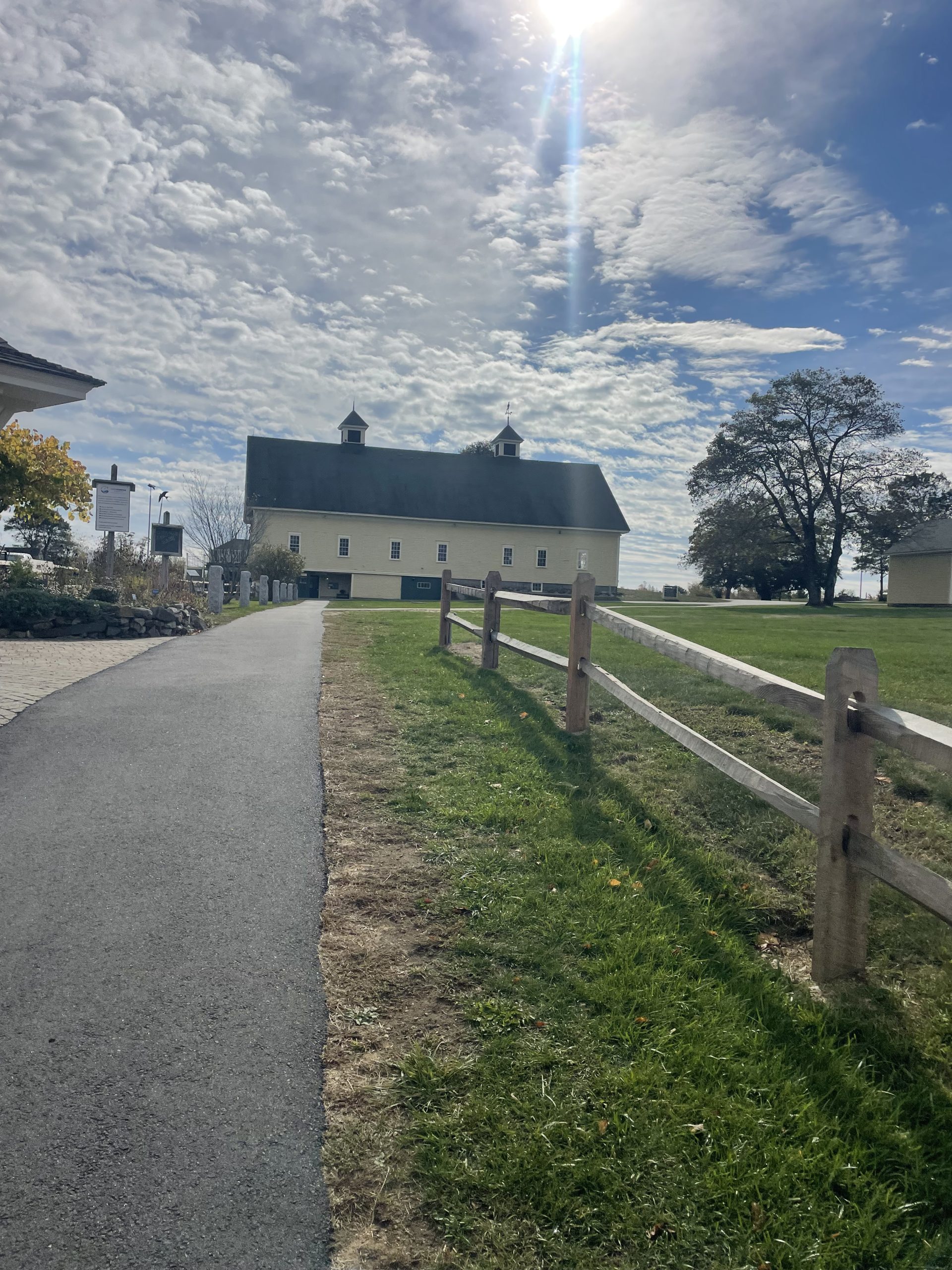
    Historic farm at Wells Reserve at Laudholm
    Farm stand in Ogunquit

    We visited Kennebunkport town, somewhere we had not been before. This historic port city (home to the Bush Family) is full of fabulous shops and restaurants and can be very busy on a weekend. We had a marvelous lunch (lobster roll of course) at The Boathouse right on the harbor.

    Lots of shops on the seaside in Kennebunkport
    Lots of great shops
    Love Lobster in Maine and this Lobster Roll at The Boathouse in Kennebunkport did not disappoint.

    We drove about 45 min north to Portland Maine. Maine’s largest city is home to about 70,000. Over the past decade Portland has emerged from a sometimes grimy port city to a fresh and thriving tourist destination, while keeping its fishing and lobster roots. There are many wonderful shops to peruse, beautiful views and museums too. And food…so many restaurants. We had a marvelous dinner at Solo Italiano right near the port.

    Portland Harbor
    Exceptional Drinks and Food at Solo Italiano in Portland Maine
    Octopus at Solo Italiano

    Time to Plan New England in the Fall

    We planned our road trip for fall color about 8 months in advance. Starting in New Hampshire, crossed over to Vermont, looped down to New York and back up to Maine. We had our own car since we were on a larger road trip, but you could easily do a similar itinerary flying into any of the NYC Airports, Boston or Portland.

    Portland Maine

    There is much more you could consider when you decide to find Time to Plan New England in the Fall. MUCH more. But for us, our visit was everything we had hoped for and we would definitely go again.

    Thanks for reading my post Time to Plan New England in the Fall. Happy Fall Y’all! Nothing like basking in the reds and golds of fall before winter descends.

    Historic Boscobel House on the Hudson River in Beacon NY

    This is our sixth and final post of cross USA road trip we did in September and October 2025. See the other posts; Yellowstone National Park USA, One Day in Chicago Illinois, Cleveland Ohio Two Museums Not to Miss, Visit the National Baseball Hall of Fame, and Fun Roadside Attractions Cross Country Interstate 90.

    Lots of fall color in beautiful Ogunquit Maine

    What’s next? We are heading next week to a 16 day European Christmas Market Tour! Follow our journey at our Instagram account for daily updates. Thanks for following along…we are grateful when you share, pin and comment on our travel posts.

    Fairfax Vermont
    Ogunquit Maine
    North America Travel

    Fun Roadside Attractions Cross Country Interstate 90

    Minnesota and South Dakota

    Iconic American roads are famous for some fun and crazy roadside attractions. Everything from the World’s Largest Ball of Twine in Kansas to Cadillac Ranch in Texas. See a full list here. Since we have driven across the USA multiple times, we have visited some of these quirky and unexpected sites. So on our recent return drive from Maine to Washington State, we visited four more. Here are our suggestions for Fun Roadside Attractions Cross Country Interstate 90.

    SPAM Museum, Austin Minnesota

    Interstate 90

    On our 6 previous cross-country road trips we have wandered around multiple interstates, back roads and the iconic Route 66. But for the purpose of this round trip cross country drive we stuck pretty close to Interstate 90. I-90 is an amazing interstate system that starts in Seattle and ends in Boston Massachusetts. It’s well maintained, and despite parts of the interstate being in wide open and sparsely populated regions, it is safe.

    I-90 Starts in Seattle Washington

    History of Roadside Attractions

    When I was a kid we drove from Seattle to the Redwood Forests and my clearest memory of that trip is a giant Paul Bunyan and his Blue Ox Babe! I don’t really remember the trees! US road travel has always been part of the culture, and US entrepreneurs have cashed in on this for generations. Here is what Wikipedia says about the history of roadside attractions;

    When long-distance road travel became practical and popular in the 1920s, entrepreneurs began building restaurants, motels, coffee shops, cafes, and unusual businesses to attract travelers.[4][5] Many of the buildings were attractions in themselves in the form of novelty architecture, depicting everyday objects of enormous size, typically relating to the items sold there.[6] Some other types of roadside attractions include monuments and fictionalized-paranormal/illusionary amusements such as the Mystery Spot near Santa Cruz, California,[7] or curiosities such as The Thing? along Interstate 10 in Arizona.[8]

    With the construction of the U.S. Interstate Highway System in the mid-1950s, many roadside attractions were bypassed and quickly went out of business.[5] Some remained attractive enough to divert travelers from the interstate for a brief respite and thus remain in business. (Wikipedia)

    Filters on photos
    An iconic old gas station on Route 66, 2016.

    Some Quirky and Some Not

    In this post today I’m sharing four US Roadside Attractions we visited on our return trip. Two are a bit quirky, and two were fascinating. Here is our list;

    Jolly Green Giant

    If you grew up in the USA in the 1960’s, the Jolly Green Giant TV Commercial and jingle were part of daily life. The Jolly Green Giant brand of canned and frozen vegetables created the iconic symbol in 1928. The 55 foot fiberglass statue of The Jolly Green Giant in Blue Earth Minnesota, right on I-90, was created in 1978. It attracts more than 10,000 visitors a year, including me and my husband in September.

    Jolly Green Giant, Blue Earth Minnesota

    SPAM Museum

    How this humble meat in a square can became an icon around the world is the story you will learn at the SPAM Museum in Austin Minnesota. I was pleasantly surprised by this fun, colorful, interesting, educational and FREE museum. Located in the heart of the historic community of Austin. SPAM (an acronym for Spiced Ham) is manufactured by the Hormel Company. George Hormel founded Hormel Foods which today owns multiple well-known products under many other brand names, such as Applegate, Columbus Craft Meats, Herdez, Jennie-O, Planters, SKIPPY, and WHOLLY. 

    The museum is colorful and fun and kids would love it. There are multiple interactive activities as well as recipes, history, science, a gift shop and free samples! Over 100,000 people visit each year. I really enjoyed our visit and recommend it highly.

    SPAM Museum Austin Minnesota
    SPAM was a staple food during WWII
    Island nations love SPAM . Guam consumes more SPAM than any other place in the world
    Monty Python helped bring SPAM into the psyche with humor

    The Corn Palace

    I arrived at The Corn Palace in Mitchell South Dakota having done zero research and expecting something tacky and kitschy. Absolutely not. We were astonished. It is so much more than a tacky tourist attraction…it is the center of the lovely small historic farming town of Mitchell.

    The Corn Palace website describes the history as;

    Eight years before the turn of the 20th century, in 1892 (when Mitchell, South Dakota was a small, 12-year-old city of 3,000 inhabitants) the World’s Only Corn Palace was established on the city’s Main Street. During it’s over 100 years of existence, it has become known worldwide and now attracts more than a half a million visitors annually.

    The palace was conceived as a gathering place where city residents and their rural neighbors could enjoy a fall festival with extraordinary stage entertainment – a celebration to climax a crop-growing season and harvest. This tradition continues today with the annual Corn Palace Festival held in late August each year.

    Some 500,000 tourists come from around the nation each year to see the uniquely designed corn murals. The city’s first Corn Palace was built as a way to prove to the world that South Dakota had a healthy agricultural climate.
    (Corn Palace Website)

    I was astonished by the beauty of the interior performing and sporting venue, as well as the annually-changed exterior murals made of corn and corn byproducts. More than 500,000 people visit the Corn Palace each year. I highly recommend a visit to the Worlds Only Corn Palace when in South Dakota.

    Exterior of the Corn Palace, Mitchell South Dakota
    Gorgeous interior for sports and arts at the Corn Palace
    Exterior Murals are changed annually
    Mural theme for 2026 is Wonders of the World

    Wall Drug

    One of the most famous USA roadside attractions is in the small town of Wall South Dakota, where more than 2 million people a year visit Wall Drug. And to think it all started with free ice water in 1931.

    The depression was raging, offering something free…even water…was unheard of. But Wall Drug founder Theodore “Ted” Hustead, took a chance. He used free ice water and catchy roadside signs to lure visitors on their way to Mount Rushmore and the Badlands. And today, millions of people follow in those same tracks. Today the sprawling complex is a bit tourist kitsch, with tsotskys and old West theme. But, especially for kids, there is a lot of fun to be had. We had a cup of the iconic 5-cent coffee (it was good), walked around on a chilly October day and smiled at the wide range of crazy sights from a giant Jack Rabbit to a T Rex. Something for everyone in Wall Drug, Wall South Dakota.

    Silly Wall Drug, South Dakota
    Touristy trinkets, clothing and art available for purchase in Wall Drug
    Surprisingly good 5-cent coffee
    Annie Oakley

    Driving Across the USA

    Our month long trip covered 16 states and 8400 miles. Sometimes exhausting but always entertaining. I will share one more Road Trip Blog Post coming up…but I hope you enjoyed today’s Fun Roadside Attractions Cross Country Interstate 90. Be sure to see our other posts from our cross country trip; Yellowstone National Park USA, One Day in Chicago Illinois, Cleveland Ohio Museums Not to Miss and Visit the National Baseball Hall of Fame.

    We are always grateful when you share our posts to your friends and family, pin our posts and comment on our posts. Thank you.