


It seems like a lifetime ago that COVID-19 cut our European tour short. In May 2020 we were set to see Estonia, Latvia, Lithuania and Ukraine. But of course we had to go home to the USA and, with everyone else, wait out that crazy time. Six and half years later, here we are finally. It took a while but it was worth the wait – The Baltics: Tallinn Estonia, Riga Latvia, Vilnius Lithuania.
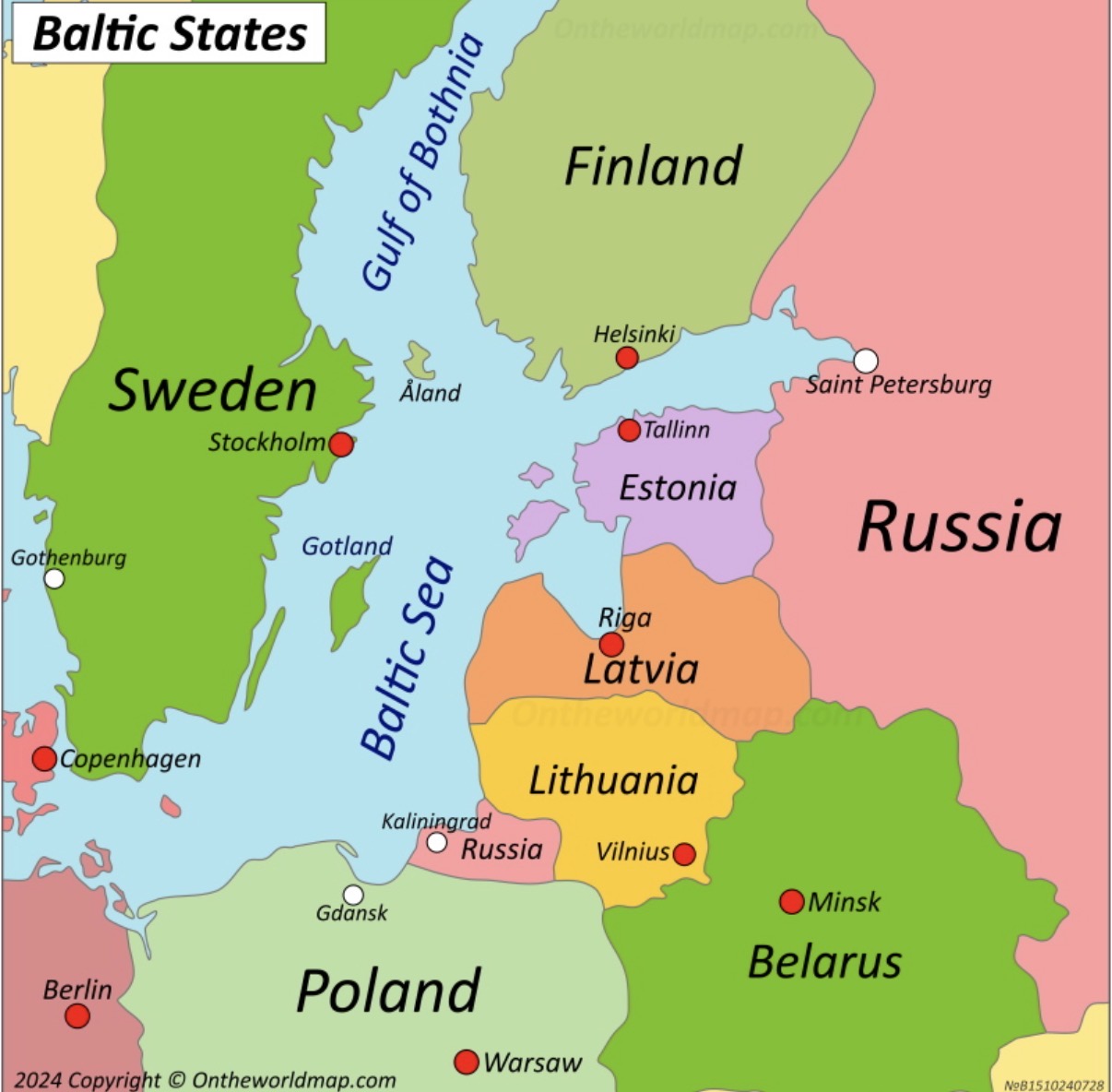
The Baltics
The three countries of Estonia, Latvia and Lithuania are often referred to as the Baltics because of their position on the Baltic Sea. Estonia, Latvia, and Lithuania share an intertwined history of ancient tribal roots, centuries of foreign rule, a 20th-century fight for freedom, and modern European integration. But each has a strong since of individuality, language, history and patriotism.

Brief History
Ancient Tribes & Crusades: In the early Middle Ages, Estonia and Latvia were inhabited by Finnic and Baltic tribes. During the 12th and 13th-century Livonian Crusades, German crusaders conquered and Christianized Estonia and Latvia, establishing feudal rule and prosperous Hanseatic League trading towns like Tallinn and Riga.
The Rise of Lithuania: Unlike its northern neighbors, Lithuania successfully resisted the crusaders. It consolidated into the Grand Duchy of Lithuania in the 13th century, expanding into a major medieval European power that later united with Poland.

World War II & Soviet Rule: The infamous 1939 Molotov-Ribbentrop Pact led to the illegal Soviet occupation of the Baltic states in 1940. They suffered mass deportations, brutal repression, and a period of Nazi occupation before being re-absorbed into the USSR for 40 years.

The Singing Revolution & Baltic Way: In 1989, approximately two million people formed the Baltic Way—a massive 675-kilometer human chain connecting Tallinn, Riga, and Vilnius to protest Soviet rule.

Sovereignty Restored : The collapse of the Soviet Union accelerated their recognition, and all three regained full independence with Lithuania being the first in 1990 followed in 1991 by Estonia and Latvia.
Modern Integration: Today, Estonia, Latvia, and Lithuania are thriving members of the European Union and NATO, known for digital innovation, rich cultural traditions, and strong democratic institutions. You can read more about this regional framework in The Baltic States: Estonia, Latvia and Lithuania (Wikipedia)
Tallinn, Estonia
We spent four days in Tallinn, arriving via ferry from Helsinki across the Baltic Sea. Tallinn is a popular cruise port and during the day the old town was busy with cruise passengers. But in the evening it is quieter and offers a lovely selection of restaurants. You could easily do Tallin in two days or more if you want to see the surrounding countryside. During our four days we had comfortable fall weather and enjoyed our quiet wandering and an easy pace. Of the three cities Tallinn’s Old Town is the smallest with the most medieval feel.
Here are our not to miss recommendations all within easy walking distance from Old Town;
Top Rated Sites
Town Hall Square and Town Hall – the main gathering place in the city of Tallin since Medieval times. The Town Hall Tower was built in 1404 (note the tower is only open to visitors in the summer). Tallin’s Old Town and Town Hall Square have the most storybook feel of the three Baltic capitals.


St Olav’s Church – built in the 12th century, Saint Olav’s Tower can be seen from nearly everywhere in Old Town
Fat Margaret Tower (Great Coastal Gate) – construction began in 1511 on this town gate providing fortification between the town and the sea


St. Catherine’s Passage – a narrow medieval lane dating to the 13th century and home to former Monastery the passage is a beautiful not to be missed lane
Kiek en de Kok – fascinating underground tunnel and museum dating as early as 1475 with tunnels being used into the 1990’s as Cold War bomb shelters


Viru Gate – dating to the 14th century the remnants of this gate marks the entrance to Tallinn’s Old Town. It is also home to the 24 hour flower market
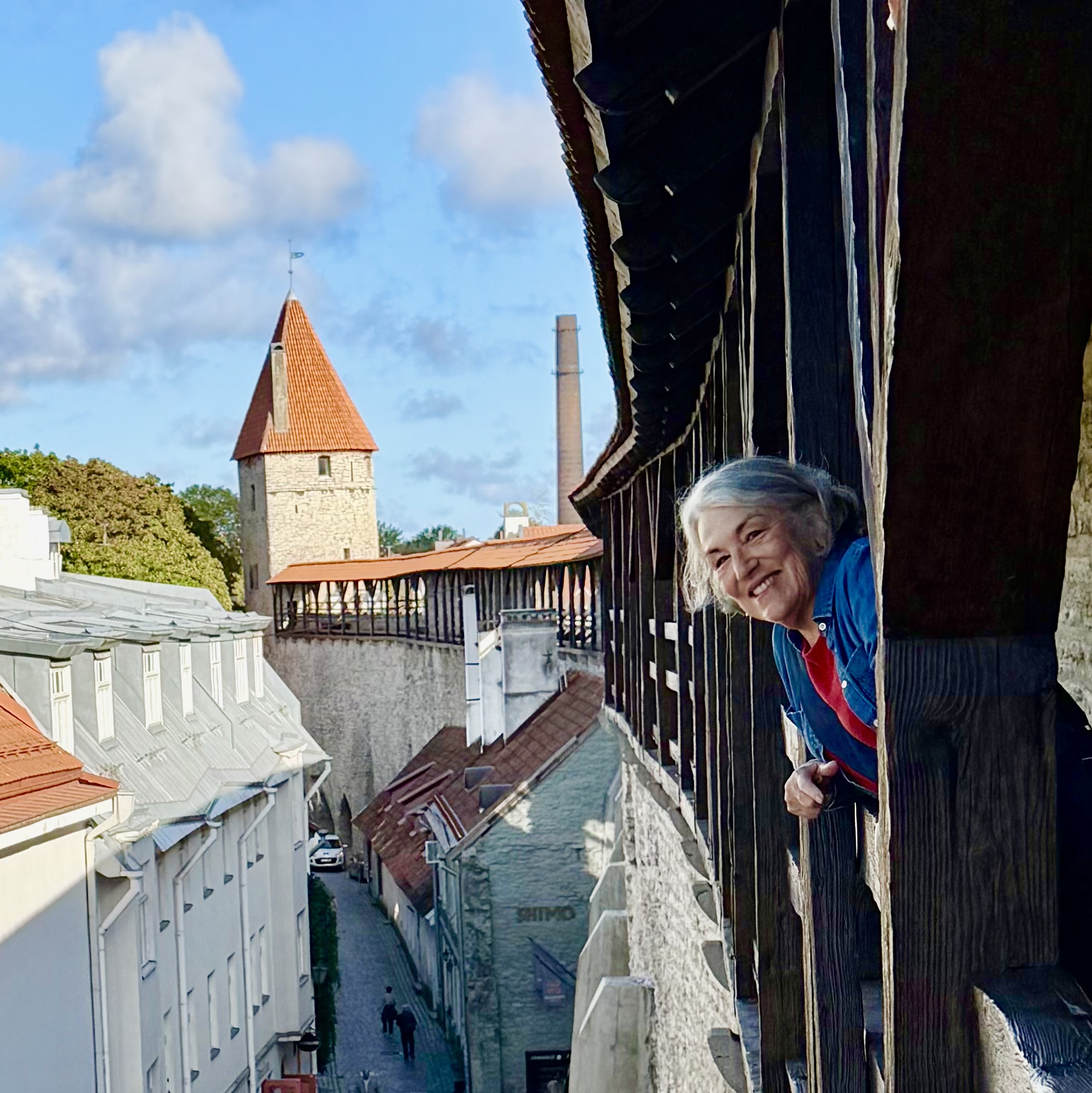
Hellemann Tower and City Wall – adjacent to the Viru gate, this is the best place to access the city wall and towers. Do not miss this.

Town Hall Pharmacy – still an operating pharmacy in operation since 1422, the Raeapteek is one of the oldest continuously operating pharmacy’s in Europe
Masters Courtyard – another not to miss courtyard, easy to miss but worth the search, home to small shops in an ancient area of old craftspeople.


St Nicholas Orthodox Church – Church turned museum St Nicholas not only offers a wonderful museum of restoration and conservation, but the best view in Tallin.


Tallinn City Museum – housed in a medieval merchant building from 1400’s the Tallinn City Museum offers history of the region.


Where to Eat and Stay in Tallinn
Our hotel the Hestia Barons was perfectly located for exploring everything we wanted to see in Tallin. In a historic building but comfortable and included a great breakfast. We paid $116 USD per night.

We recommend the following for dining in Tallinn;
Old Hansa – yes it’s a bit touristy but I still highly recommend eating at Old Hansa Medieval Restaurant. All by candlelight (no electric lights) with a wide variety of local meats including deer, bear, duck and more. Beautiful interior and great service.

Pelman Kohvik – Authentically delicious dumplings, a favorite Estonian food. This is where you want to go.

Munga Kelder – located in a cellar you might miss it if you aren’t looking. Munga Kelder is known for it’s amazing local mushroom soup and fresh made bread.

Rado – daily fresh menu on a blackboard, you know it’s what the Chef found at the market. We had a great meal here and wine too.

Maiasmokk Kohvik – the oldest cafe in Tallinn, we stumbled into this fabulous coffee and dessert spot when we decided we needed to partake in the afternoon pastime of a sweet treat. Cake with coffee is a daily ritual, I think I could get used to.

Riga, Latvia
Our next stop was Riga Latvia, easily accessible by Flixbus. We have used Flixbus before and find it inexpensive, comfortable and a great way to travel between cities in Europe. We arrived Riga ready to explore for five days.
Riga’s Old Town is not as compact at Tallinn, but it is nicely laid out and easy to maneuver. The restoration of Riga after WWII is remarkable and the town is beautiful once again.

Top Rated Sites
Riga is a beautiful city that unfortunately was nearly destroyed by WWII Nazi bombing and later by the Soviet Union. After many decades of rebuilding and long awaited independence in 1991, Latvia today is thriving. Riga is proud of how far they have come. Today in Riga the people speak Latvian, English and Russian.
We had five days in Riga, but you could do this town in three days. Or if you have more time there are several day trips you could consider that we did not do.
Town Hall Square and the House of the Blackheads – The Town Hall Square in Riga was completely rebuilt after World War II, when much of the square and its historic surroundings were destroyed. Today, visitors are welcomed by the ornate façade of the House of the Blackheads, the reconstructed Town Hall, and other historic buildings that restore the square’s former grandeur. We loved our self guided tour of the House of the Blackheads.
The House of the Blackheads is named after the Brotherhood of Blackheads, a medieval guild of unmarried foreign merchants, shipowners, and traders who used the building as their headquarters.

Town Hall Square is also home to the spot that marks the first outdoor Christmas Tree (1521) and the Statue of Roland, a striking symbol of Freedom and Justice.


Museum of the Occupation of Latvia – this exceptional museum, also located on the Town Square, has the following mission: Remember what happened to Latvia, to its people and land during the Soviet and German National Socialist regimes from 1940 to 1991. Commemorate those who were unjustly convicted and murdered, who died fighting for foreign powers, who suffered and died during repressions and deportations, who fled the occupation forces, and were scattered throughout the world.
Remind the world of the offenses carried out by foreign powers against the Latvian state, its land, and its people.

Outside the Museum of the Occupation of Latvia you will find the monument to the Latvian Riflemen, and the memorial to the Victims of the Soviet Occupation. Don’t miss these.

Saint Peters Cathedral – we visited a dozen churches using GPSMyCity and Saint Peters is absolutely our favorite. The restored church now offers an elevator to the tower where you will enjoy spectacular views of all of Riga.

Swedish Gate and The Three Brothers – Incredible structures untouched by war, the Three Brothers are today the oldest homes standing in Riga. Just down the street you will find the Swedish Gate, the only city gate still standing. Built in 1698 it has somehow survived invaders and wars for centuries.


Riga Market and Food Tour – we loved our Food Tour which took place primarily in the Riga Market. The market is built inside five German zeppelin hangars from WWI. Riga Central Market is one of the largest markets in Europe and has been an important part of the city’s daily life for nearly a century. The historic market pavilions and outdoor area offer local products, seasonal flavors, and an authentic market atmosphere in the heart of Riga. Don’t miss this.


Canal Cruise – on our final day in Riga we did a canal cruise. 20 Euro each we thought it was well worth the money for the views of this beautiful city from the water as well as the interesting history narrative.


Freedom Monument – a beautiful monument, just outside the Old Town, is worth a visit. It commemorates the soldiers who fell during the Latvian War of Independence 1918-1920. The monument surprisingly survived 50 years of Soviet rule, because of it’s high artistic value. It is a symbol for the Latvian people and has served as a gathering and rallying spot for independence and freedom.

We recommend using GPS My City app in Riga where you can easily follow the Old Town Riga guide and the Churches of Riga Guide. Both worth doing.
Day Trip
Jurmala – I definitely recommend taking the train from Riga just 30 minutes to Jurmala, resort city on the Gulf of Riga. It’s known for wooden, art nouveau seaside villas, Soviet-era sanatoriums and long, sandy Jūrmala Beach. Near the beach are the Dzintari Concert Hall complex, dating from the 1930s, and Dzintari Forest Park. It was fun to take the train, to walk the long sandy beach, people watch and to have dinner in one of the many restaurants. An easy and fun day trip.


Where to Eat and Stay
We chose Hotel Monte Kristo because of its location near to the bus station, and it was just on the fringe of the Old Town. We easily walked everywhere. The hotel is old, but clean and comfortable albeit a bit quirky. We paid $85 USD per night.
During our visit we dined at several restaurants featuring local Latvian favorites. We also did a food tour of the market, which provided us a full meal for that day. For restaurants we recommend the following;
Gastropub Folkklub – a fun cellar location completely underground with a great menu of local Latvian favs and a great beer selection too.

Gastropub Abby – a modern pub located near Saint Peter’s Church in the heart of old town. Very large menu with some Latvian specialties and international cuisine as well.

Grillbars House of Light in Jurmala – on our day trip to Jurmala we chose the House of Light for a wonderful meal that included local seafood and a great dessert.

Vilnius, Lithuania
Our next stop was the capital of Lithuania – Vilnius. We arrived again via Flixbus after about a four hour comfortable ride. We walked from the bus stop about 15 minutes to the Old Town and our apartment/hotel. Vilnius is the largest of the three capitals but still very easy to get around.

Top Rated Sites
Lithuania is historically known for being the largest state in medieval Europe during the 14th and 15th centuries, holding out as Europe’s last pagan nation before converting to Christianity in 1387, and leading the peaceful Baltic Way protest to help dissolve the Soviet Union. Lithuanians are proud of their language and many refuse to speak Russian, which was required of them during the Soviet occupation.

Vilnius is a beautiful city with a fascinating history a bit different than Tallinn or Riga. Specifically of great importance is the devastation of the Jewish population during WWII. The Nazi occupation of Lithuania for three years caused the deaths of 95% of Vilnius Jewish population – more than 250,000 people. These people were not sent to concentration camps, rather were killed right here in Vilnius. Following WWII Vilnius suffered greatly under Soviet occupation and Lithuania was the first to declare independence from the USSR in 1990 after forty years of occupation.
The Occupation Museum – The Museum of Occupations and Freedom Fights in Vilnius is dedicated to showing artifacts and records from the 50-year Soviet occupation of Lithuania. This is an absolute must museum to visit in Vilnius. An eye opening tribute to the perseverance and patriotism of the Lithuanian people. Some people will find the content difficult – but it is so important to understand what happened here.


Gediminas Tower – You won’t be in Vilnius long before you hear the name Gediminas. Gediminas (c. 1275 – December 1341) was a powerful Grand Duke of Lithuania who ruled from 1316 until his death in 1341. He is celebrated as one of the most important figures in medieval Lithuanian history. Gediminas’s Tower is the remaining part of the Upper Castle on top of the Gediminas Hill in Vilnius, Lithuania. It has a viewing platform that offers scenic views of Vilnius Old Town and Vilnius Central Business District. Fabulous viewpoint and museum.


Vilnius Cathedral – Vilnius Cathedral is one of the oldest churches in Lithuania. Rebuilt multiple times in its more than 600-year history, it took on its current appearance in the early 19th century. The main structure of the cathedral survived the war intact. As World War II broke out in 1939, church caretakers hid a valuable collection of 16th-century royal burial insignia and crowns inside a secret basement niche to protect them from looting. But In 1949, the Soviets closed the cathedral, looted it, removed and destroyed its religious sculpture.


Gediminas Avenue – spend some time enjoying the pedestrian area of Gediminas Avenue. The Champs de Elysee of Vilnius. From the Cathedral stroll along the shopping and dining area all the way to the Parliament and Constitutional Court and enjoy parks and public art. And maybe some gelato. It really makes you understand how far this beautiful city has come since 1991.

Uzupis – Užupis is a bohemian self-declared “independent republic” and artistic district located in Vilnius, Lithuania, separated from the Old Town by the Vilnelė River. Similar to Freetown Christiania in Copenhagen. During the Soviet era, it was a neglected and run-down industrial area. After Lithuania regained independence in 1990, artists and free-spirits moved into the abandoned buildings. On April 1, 1997, local residents humorously declared it the Republic of Užupis, complete with its own flag, anthem, constitution, and president. The tradition continues, all in good fun. Definitely don’t miss Uzipis.


Saint Anne’s Church – Vilnius has 48 churches, 28 of those in the UNESCO Old Town. But Saint Anne’s was my favorite. St. Anne’s Church is a Roman Catholic church in Vilnius’ Old Town, on the right bank of the Vilnia river established circa 1495–1500. It is a prominent example of both Flamboyant and Brick Gothic styles. Don’t miss a quick visit.

Hales Turges Market – built in 1906 this is Vilnius’ oldest market. Come in the morning about 9am (closed Sunday) to see the locals making the daily purchases and haggling with the vendors. The market includes seafood, meat, cheese, produce as well as dry goods, housewares and even clothing and shoes. Enjoy breakfast or a coffee and one of the cafes.


We used Tours with Locals to do a “free” walking tour in Vilnius and highly recommend you do too. It was a perfect introduction to the fascinating history of Vilnius.
Day Trip
We took a marvelous day trip with Jim’s Tour to Trakai, a town about thirty minutes from Vilnius and home to the reconstructed island castle. Trakai Island Castle in Lake Galvė is accessible by a pedestrian bridge. The construction of the stone castle was begun in the 14th century by Kęstutis, and around 1409 major works were completed by his son Vytautas the Great, who died in this castle in 1430. Today Trakai is a summer destination for many locals, and we enjoyed a wonderful sunny fall day seeing the castle and walking along the lake. Our guide Jim offered such great and funny insight, not just in Trakai but along the route from Vilnius. I highly recommend this tour. Worth every penny.


Where to Eat and Stay
We chose to stay in an apartment hotel near one of the gates to Old Town, about a 20 minute walk from the bus station where we arrived. Rooma Apartment Hotel was very spacious, included a small kitchen, washer dryer available and breakfast across the street each morning at a restaurant. We loved this place and recommend it highly. We paid $150 USD per night.


During our visit to Vilnius we had some exceptional food and snacks. We recommend;
Pulpo – surprising Spanish restaurant in the heart of Old Town. One of the best meals we had during our visit to Vilnius. Not only was the food incredible but so was the service, wine and atmosphere.


Gabi – Open since the 1970’s Gabi is popular with locals and tourists alike. We enjoyed a meal in the courtyard on a quiet late afternoon.


Senoji Trabele – I read that this restaurant was one of the most authentic in Vilnius so we had to give it a try. We walked about 30 minutes outside of the Old Town to find Senoji Trabele. It was worth it. This restaurant is huge, takes tour groups in the summer, but while we were there on a Sunday afternoon we nearly had the place to ourselves.


Etno Dvaras – Multiple locations in Old Town we enjoyed an authentic Lithuanian soup lunch


Traku Dvarells – on our day trip to Trakai our guide took us to Traku Darell’s to enjoy two Lithuanian specialties; fried bread with garlic cheese and Kibinai, a local specialty. Definitely stop at Traku Darell’s when you visit Trakai.


The Baltics: Tallinn Estonia, Riga Latvia, Vilnius Lithuania.
We loved our long awaited 13-day tour of the Baltic capital cities. You could do it in fewer days, but you could also add many more days to explore regions outside of these cities. Each has its own unique personality, and I can’t say I liked any more than another. As we progressed through our itinerary I fell in love with each place for the amazing people, their resilience, and how they embrace a strong cultural history and identity even more today than perhaps ever before.

I highly recommend visiting The Baltics: Tallinn Estonia, Riga Latvia, Vilnius Lithuania. I am so glad we finally did.
Thank you for reading my post The Baltics: Tallinn Estonia, Riga Latvia, Vilnius Lithuania. See last week’s post Quietly Finding Finland here. Our next stop is The Netherlands. I hope you will follow along with us on Instagram.
We love it when you comment, share, pin and engage with our posts old and new. Thank you.


No Comments