Today we begin a series of short posts over the next couple of months, where we will discover hidden gems near to where I live in the summer months. I love living in Western Washington in the summer, with beautiful weather and outdoor activities to enjoy. So when we are here in the summer, we always relish being tourists in our own backyard. So, this blog post series idea was born. I hope you enjoy it. Our first installment of Hidden Gems of the Pacific Northwest – Rhododendron Species Garden.
A Long Wait
For decades I have said I would visit the Rhododendron Botanical Species Garden in Federal Way Washington. I would think this every time I drove by the directional sign on Interstate Five. But, as is often true in our own hometowns, it just never happened. So, finally, we made a point to visit. And what a great treat it was! A true Hidden Gem of the Pacific Northwest – Rhododendron Species Garden.
So Much More Than Rhododendrons
The gardens were much bigger than I was expecting, 22 acres of not just a fascinating collection of Rhododendrons, but a wide variety of beautiful plants of all kinds. Native plants from the Pacific Northwest as well as wonderful flowers, shrubs, trees from around the world. There is also an indoor conservancy with warm weather plants that are fascinating. Around the gardens you can enjoy an Alpine Rock Garden, a Stumpery, The Pond and Poppy Meadow and a Woodland Garden. All easy to enjoy on meandering trails and beautiful in all seasons, but especially in spring and summer.
Pacific Bonsai Museum
This wonderful space is also home to the fascinating Pacific Bonsai Museum. This was unexpected for us, and we really enjoyed the wide display of bonsai, some more than 100 years old. Fascinating. We had a chance to talk with one of the curators and she said they have fifty on display at any given time (year-round) and another hundred in storage. They switch them out seasonally. How cool is that? So I definitely need to go back and check it out in the fall.
Visit
The Rhododendron Species Botanical Garden is open Tuesday – Sunday from 10am to 4pm. Closed on major holidays. Entrance is $8 and entrance to the Pacific Bonsai Museum is by donation. Check both websites for special events, speakers and plant sales.
Growing up on and frankly IN the Puget Sound, I’m very aware and appreciative of the unique, beautiful and delicious bounty this body of water provides. A true Washingtonian loves seafood of all kinds from clams to salmon, oysters to Dungeness crab. Don’t ever try to tell me East Coast crab is better. Delusional.
Low summer tide in the Puget Sound
As you know if you follow this blog I eat just about anything, and I’m not afraid of seafood or shellfish. When I was a child we dug steamer clams right in my front yard. We traveled to Ocean Shores to dig razor clams every spring. And each summer we harvested dozens of Dungeness crabs from the Strait of Juan de Fuca.
Huge monster clams
But for some reason, despite how delicious it is, I had never harvested geoduck, the giant, funny and phallic looking clam unique to this part of the world.
That’s a big boy
Until now. Thanks to our friends who invited us, along with several other couples to try our hand at geoducking during a recent extreme low-tide (Puget Sound experiences extreme low-tides in the summer creating a perfect opportunity to hunt the giant clam that usually bores into the sand in deep water.)
Finding the mouth peeking out of the sand
Geoducks can be found buried very deep in the sand, as much as four or more feet deep. At low tide, you can carefully walk around the beach and look for a tiny “mouth” sticking out of the sand, usually less than an inch. Depending on how long the geoduck’s neck is, the body of the beast will be found deep in the sand below where you spot the mouth. A geoduck neck can be four feet long. They can live more than 150 years.
Working the tube down into the sand
Non-commercial harvesters will dig deep after spotting the mouth. Our friends used a large metal tube placed over where the mouth was found. Digging down inside the tube to locate the body of the geoduck, increasing the depth of the tube into the sand as you dig. Commercial geoduck harvesters have other methods (a very lucrative commercial market serves the Chinese insatiable appetite for geoduck). Read about it here.
The ungraceful grab of the geoduck deep in the mud
As soon as you start digging the geoduck will pull its very long neck back down from the surface. But, despite what some people think, the geoduck cannot “run”. It can only retract the neck but its body will stay in place. Digging dip to find the body without hitting the body with the shovel makes for a delicate process. But the next part is neither delicate or graceful.
Our hosts Jeff and Dayl know how and where to harvest the geoduck
Lying on your stomach you must reach deep into the muck inside the hole and grasp the giant clam by the shell….not the neck or you might pull the neck off. Loosening the clam from the deep mud where it has embedded itself securely takes some strength (and a few choice words). With luck you will come up with a giant geoduck weighing anywhere from one pound to as much as four pounds!
Watch out for the squirt
The next step is to take lots of funny pictures of these decidedly phallic looking creatures and spend some time wondering about Mother Nature and her sense of humor.
Our harvest
Then it’s time to clean them. First rinse of all visible mud and sand. Next they need to be dipped in boiling water for about 30 seconds. This loosens the outer skin (sometimes referred to as the condom) around the neck. It’s not edible until that skin is removed. Next clean the guts and stomach and rinse again. See a video here.
Remove the tough membrane from the neck after a quick blanche in boiling water
Finally it’s time to eat. Our friends prepared an amazing geoduck sashimi with three dipping sauces. Eating the sweet and fresh as it gets delicacy couldn’t have been more delicious. Our efforts rewarded.
Sashimi, as fresh as it gets
After our wonderful day on the beach with friends we brought home three good size geoducks. I prepared geoduck ceviche – a perfect way to serve the fresh uncooked, tender body meat. I highly recommend this recipe I found on Pinterest. I used Mango in place of Papaya and it was amazing. See it here.
Geoduck Ceviche
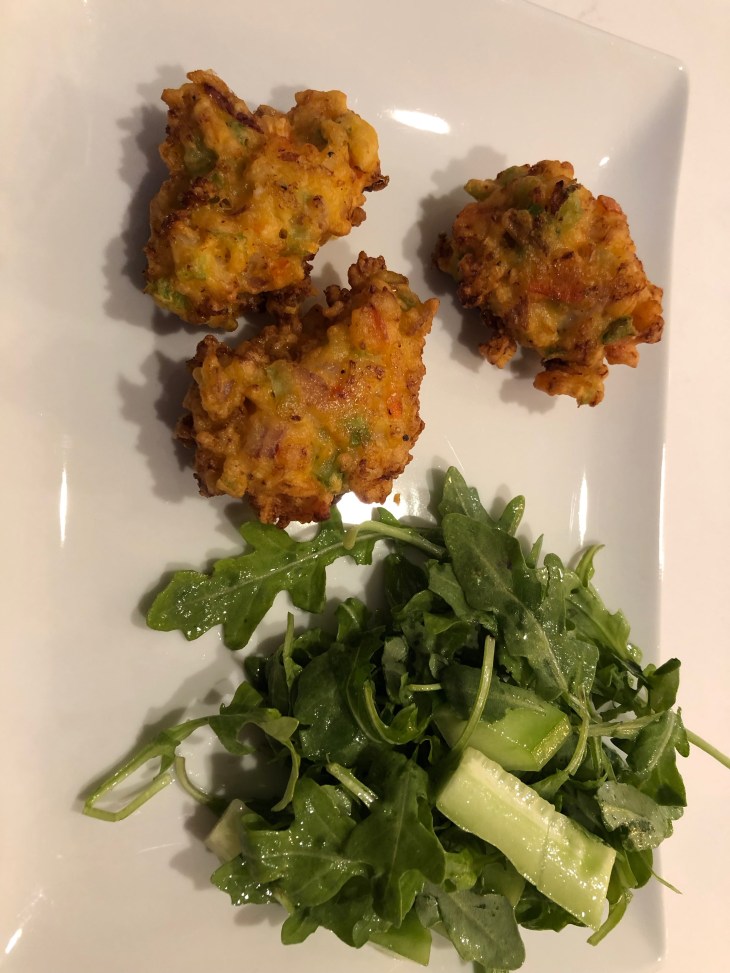
Next I used my food processor to grind the necks (which are tougher and more chewy than the body). Grind in small batches so it doesn’t get too mushy. I used the ground meat to make geoduck fritters served with a delicious dipping sauce of siracha, mayo and lemon. I found a recipe for Conch fritters that I adapted easily. See the fritter recipe here.
Geoduck Fritters
Finally I put the rest of the ground geoduck in a freezer bag and put it in my freezer. A week later it was used in a delicious geoduck chowder. When making chowder with geoduck you can use about half the usual amount of meat ratio to potatoes and other ingredients. I used both clam juice and chicken stock as my base instead of just clam as mentioned in this recipe. It was delicious.
Everyone had a great time!
To harvest any shellfish in the Pacific Northwest you need to have a shellfish license. See the rules here. It’s important not to over harvest, so that these delicious Puget Sound creatures will be around for generations to come, just like they have been for generations in the past. The name geoduck is derived from a a local Native American word from the Lushootseed (Nisqually) people gʷídəq. Puget Sound Native American’s harvested local shellfish and seafood long before any of us were here.
Don’t fear the Geoduck despite it’s unusual look. Respect and enjoy this delicate, sweet, not fishy tasting and delicious giant clam of the Puget Sound.
Summer in Washington State – Fabulous!
Sincere thanks to Kameron Minch for many of these photos in this blog and to our friends Jeff and Dayl Minch for such a fun day.
From Bloomberg News – Geoduck facts
Please pin or share our blog – we love you for it!
This website uses cookies to improve your experience. We'll assume you're ok with this, but you can opt-out if you wish.AcceptRejectRead More
Privacy & Cookies Policy
Privacy Overview
This website uses cookies to improve your experience while you navigate through the website. Out of these, the cookies that are categorized as necessary are stored on your browser as they are essential for the working of basic functionalities of the website. We also use third-party cookies that help us analyze and understand how you use this website. These cookies will be stored in your browser only with your consent. You also have the option to opt-out of these cookies. But opting out of some of these cookies may affect your browsing experience.
Necessary cookies are absolutely essential for the website to function properly. This category only includes cookies that ensures basic functionalities and security features of the website. These cookies do not store any personal information.
Any cookies that may not be particularly necessary for the website to function and is used specifically to collect user personal data via analytics, ads, other embedded contents are termed as non-necessary cookies. It is mandatory to procure user consent prior to running these cookies on your website.