


We have been on the island of Sao Miguel Azores for just under three weeks and have been loving the food here. Not exactly like mainland Portugal…rather a mix of cultures and flavors from the unique history of the island. Today let me share with you how we are loving Exploring the Cuisine of Sao Miguel Azores Portugal.


The Island of Sao Miguel
The Azores archipelago is made up of nine islands, with Sao Miguel being the largest. We only visited Sao Miguel, located at latitude 37°42′N and 37°55′N latitude, which puts it on a similar latitude to the southern part of Virginia, southern Missouri, or central/southern California. The volcanic island receives average annual rainfall ranging from 1,000 mm to over 3,200 mm (roughly 39 to 126 inches), which explains the lush, green jungle terrain.

Colonization
In the 15th and 16th centuries Portuguese settlers began production of wheat to supply garrisons in North Africa and woad (a blue dye plant) which was very profitably exported to Flanders for textile markets. This period also introduced slaves to the island primarily from North and West Africa.
Orange Wealth
In the 18th and 19th century wheat was abandoned and oranges became a very profitable crop, with exportation to England. Many British merchants moved to the island and became very wealthy until the orange blight in 1860 wiped out the citrus groves. Many wealthy citrus growers abandoned palaces and left the island.


New Industries
The late 1800’s introduced pineapple grown in greenhouses, tea on the wet north coast, as well as tobacco and sugar beets. These can all still be found on the island today.
Dairy
But it wasn’t until the 20th Century that cattle and dairy became the cash crop for the islands. Today the island’s beautiful green pastures dotted with black and white cows is a symbol of the award winning cheeses made here. Sao Miguel supplies milk, cheese and butter to mainland Portugal and international markets. Cheese is big business in Sao Miguel.


Let me tell you more about cheese and other delicious foods from our Exploring the Cuisine of Sao Miguel Azores Portugal;
Cheese
We ate a lot of cheese during our time on the island. A wide variety of cheese is made across the Azores, from fresh soft cheese to aged hard cheeses. No matter what your taste, you will find a cheese to your liking. Before we began our cheese exploration we signed up for a cheese tasting with Hungry Whales food tour in Ponta Delgada. It was a great way to learn both history and to taste a variety of different cheeses.

Cheese is available in any grocery store, but there are several cheese shops throughout Ponta Delgado including The King of Cheese located in the Mercado (don’t miss the Mercado) and The Prince of Cheese located on the shopping street near the main square. Both offer tastings, wine and other products. If you want to bring cheese home to the USA you can purchase an aged cheese and they will shrink-wrap it for transport.


Seafood
I ate ALOT of seafood while on Sao Miguel. I believe I ordered seafood at all but one restaurant we ate at. Being an island, it’s no surprise the wonderful seafood options available. Octopus and tuna are readily available and delicious. New to me foods included limpets – grilled in the shell, and trigger fish – deep fried. You might know trigger fish as Balistidae or in Hawaii Humuhumunukunukuapuapaa. I had a delicious fresh fish, similar to cod, grilled to perfection, while my husband and our friend Randy enjoyed a whole grilled rockfish. There is shrimp, eel, barracuda, swordfish and more.


Sardines and herring are very popular, and we ate small grilled whole sardines at several meals. In addition canned sardines are everywhere and very popular too. They make great gifts to take home and are easy to pack and carry.


Bakery
Sao Miguel and the Azores Archipelago have some specialty bakery items that you really should try when you visit. I did not try everything, but I had some favorites The soft and delicious Bolo lêvedo, which looks a little like what we call English Muffins in the USA, is so delicious. Much more tender and delicious than an English Muffin. We bought some and toasted it in the toaster, but locals like it cold with sliced cheese for breakfast.


Queijadas da Vila are the signature sweet of Vila Franca do Campo on São Miguel. A tiny bit like the famous Portuguese Pastel de Nata, but more cakey than a tart. So good.

But my favorite is the star shaped Queijadas da Graciosa tarts. These tarts have cheese, pineapple and orange combination that is surprisingly delicious. These also travel well and you can find packed boxes of Queijada da Graciosa ready to tuck in your suitcase to share with family and friends back home.

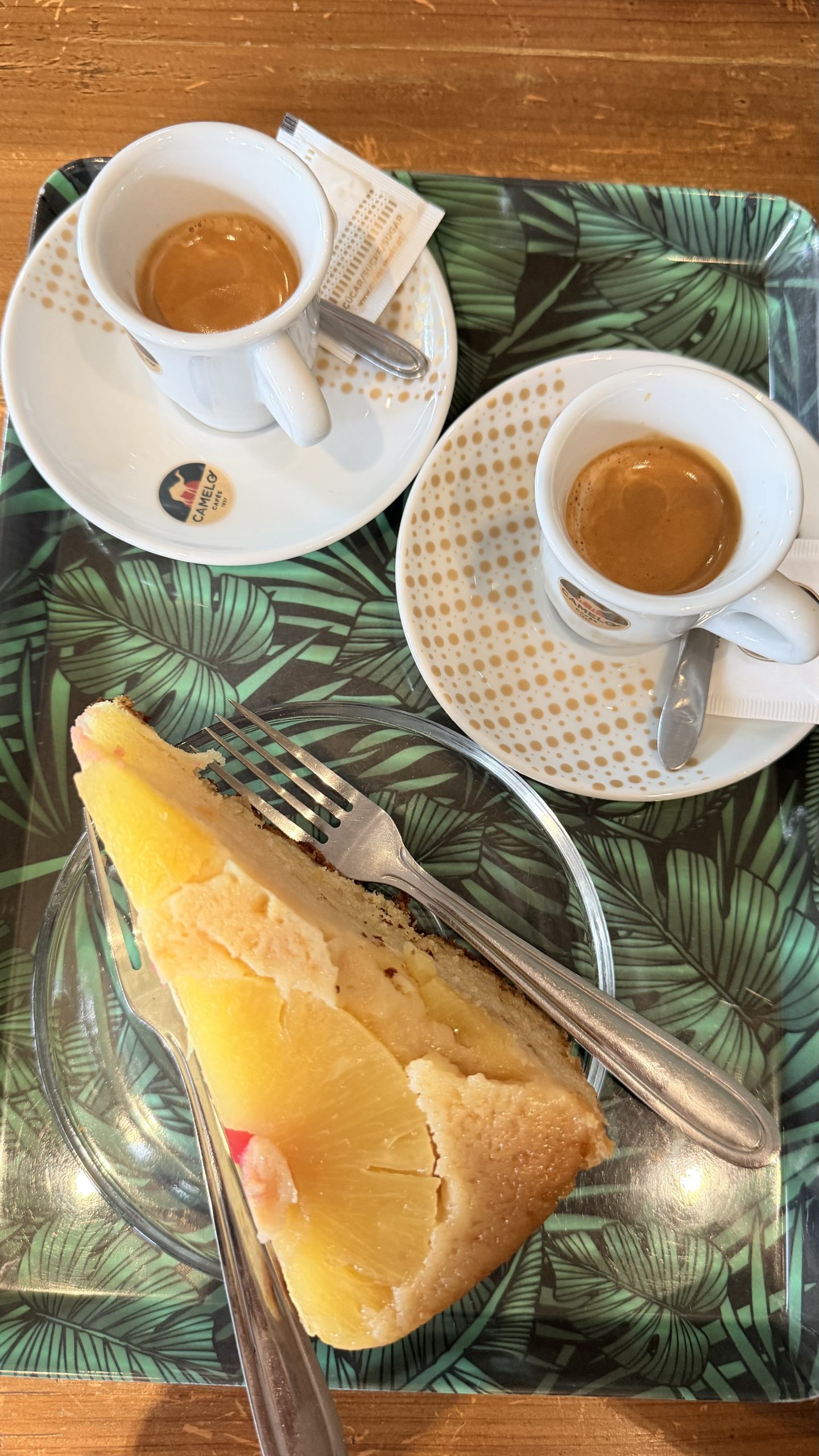
Pineapple
The Azores are not tropical, so how in the world does some of the best pineapple in the world grow here? It’s an interesting story. Below from the website Azores Getaways;

Pineapples arrived in the Azores in the mid-19th century, originally as a decorative plant. Wealthy residents grew them in private hothouses with no intention of eating them. The shift came from economic necessity: São Miguel’s orange trade, which had been the island’s primary export, collapsed under competition and disease in the 1800s. Farmers needed a new crop, and pineapple, already proven in the greenhouses, moved from ornament to industry.


The Azores pineapple is grown in whitewashed greenhouses on São Miguel, takes up to three years to produce a single fruit, requires a week of smoke to trigger flowering, and never leaves the island in significant quantity. If you eat it here, you are eating something that exists almost nowhere else in the world.
Having spent a significant amount of time in the Hawaiian Islands I never would have thought there was better pineapple…but there is. Right here on tiny Sao Miguel.
Tea
What is a tea plantation doing in the middle of this European island? We have visited many tea plantations over the years but never in Europe. Gorreana is Europe’s only tea plantation, operating on Sao Miguel since 1883. Gorreana was started with seeds from Brazil through the Micaelense Agricultural Promotion Society under the leadership of José do Canto. Looking again for diversification after the orange blight, several plantations struggled along in the early years.

It wasn’t until the Micaelense Agricultural Promotion Society hired the Chinese tea master Lau-a-Pan and his assistant and interpreter, Lau-a-Teng, who brought the ancestral wisdom of tea production. The rest is history. Today tea leaves are harvested between April and October and tea is sold on the island and exported. Visitors are welcome to see the production facility, hike the tea fields and enjoy tea at Cha Gorreana.


Last But Certainly Not Least – Cozido das Furnas
Cozido das Furnas is considered the signature dish of the island of Sao Miguel. It is a slow-cooked volcanic stew from the parish of Furnas. Furnas itself is a fascinating place to visit (more about this in the next Azores post) and while you are there you must eat Cozido das Furnas.

Chefs layer a mix of meats and root vegetables into a sealed pot, lower it into buracos (holes dug into the geothermally heated volcanic soil near Lagoa das Furnas), and let it simmer for 5 to 7 hours using natural steam and ground heat (roughly 95°C to 100°C).
Typically includes beef, pork, chicken, chouriço, morcela (blood sausage), bacon, potatoes, sweet potatoes, yams, carrots, and cabbage. No extra water or stock is added; the steam extracts the juices

When you visit Furnas you can see the mounds that cover the boiling stew below, and if you are lucky you will see the unveiling of the stew as we did. The stew is carted off to the restaurant for lunch or dinner.
I am so glad we took the time to do this fun and delicious activity while on Sao Miguel.
Exploring the Cuisine of Sao Miguel Azores Portugal
We ate really well, and learned a lot too, during our month long visit to the beautiful island of Sao Miguel. I recommend you visit the Mercado da Graca in Ponta Delgada, and any of the other weekly farmers markets scattered around the island. We enjoyed the Mercado Agricola de Santana (Thursday and Saturday) near to our Airbnb.


Hungry Whales is also a great resource in Ponta Delgada. We enjoyed a cheese tasting and the next day an exceptional food tour through Ponta Delgada. Delicious and educational.
The island is home to hundreds of restaurants too. In my next post I’ll share what we found to be our favorites. Thank you for reading my post Exploring the Cuisine of Sao Miguel Azores Portugal. Come back for more Sao Miguel recommendations soon.


Meanwhile be sure to see last week’s post Egypt – Old, New and Unexpected Too.
We are always grateful when you pin, share, comment and spend time on our blog. Thank you. Obrigado.


No Comments